Phil's Superpower of Enthusiasm

A place to write about things I enjoy, for my own edification. Headphones, audio gear, albums, whiskey, wine, golden retrievers etc.

Some frequently sought pages:

I’m experimenting with Amazon Affiliate status in an attempt to defray some of the costs of headphone reviews; Amazon links may be affiliate links (depending on whether or not I’ve figured out how to use them correctly). Please feel free to buy elsewhere; this is just one way to recoup the costs of this hobby.

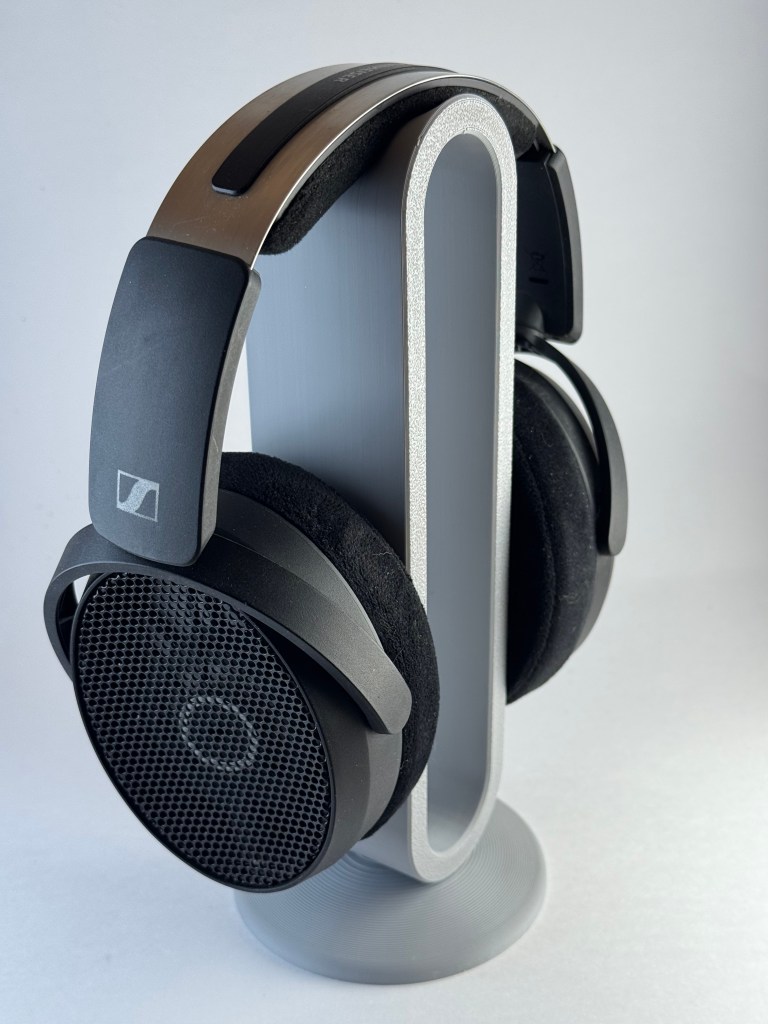
  • [ORIGINAL MSRP $450. Purchased used in October 2025 for $220 on r/AVexchange. Currently available on Amazon for $349, $399 for Pro Plus model1, and $349 directly from Sennheiser in December 2025]

    [Tl;dr: This is a really great product, one that I hope resets expectations in this market segment. Between the two stock pad configurations the versatility it brings is pretty exceptional, as is the comfort. With the velour pads, answers the question, “What if the 6XX had bass and was even more comfortable?” With the tweed pads, answers the question “What if the 600 had bass, better controlled treble, and was even more comfortable?” The only real downside is that the it trades a little bit of resolution and detail for those benefits, but for casual listening I’ll make that trade almost all of the time. If I could only have one headphone across all of my uses … this would make a really compelling case for itself.2 Pair it with a good planar for critical listening (like the HE6se v2 or Arya Stealth) and you’ve got all of your bases covered for substantially less than $1000.

    There are headphones I would take over the 490. There aren’t many, and they’re mostly more expensive and come with more limitations.]

    Scores:

    Cost-agnostic: 9 out of 10 Denalis

    Cost-sensitive: 8 out of 10 Denalis

    Bass3MidsTrebleSoundstageComfort/Fit4
    HD 490 Pro (velour pads)4B4B4C4BA
    (Tweed pads)3A4A4B4BA
    (more…)
  • Printing time: 10+ hours, depending on printer and materials. In December 2025, $60 + a cable for the cheapest version, $70 for the “pro” version of pads. Easy to moderate difficulty, depending on your choices.

    [Tl;dr: This was my first DIY headphone, and while there were some frustrations along the way, it was a great first project AND a headphone I genuinely enjoy listening to today. If you don’t know how to solder and don’t want to learn, skip this and go with a Head(amame) kit. If you know how to solder, are curious to learn a little bit about electronics, or want a much higher performing headphone, this one is for you.

    Great project. Easy to source, relatively straightforward to both print and assemble, and an output that I really like listening to.]

    (more…)
  • It was pointed out to me the other day that though I spend far, far too much of my time in person talking about 3D printing with everyone and anyone who will listen to me (and some who really don’t want to …1), I really haven’t posted much at all about it online.2

    Table of Contents:

    1. Introduction
    2. The Prints
      1. Functional Prints
      2. Fun Prints
      3. Gift Prints
    3. The Process
    4. Conclusion

    Introduction

    I have been interested in the idea of 3D printing since at least … college? I feel like one of my physics professors talked about some early 3D printing stuff in the very early 2000s. This was a man who talked fondly of the early IRC days and has now left academia to go be a financial quant, so he’s definitely the type.3 But, the early days of 3D printing were, frankly, awful. Printers were projects in and of themselves, not for projects. Then I became a public servant, and we all know how well that pays so 3D printing seemed like an expensive (resources and time) hobby that I couldn’t really afford to get into.

    Making always seemed really cool, but I’d never really worked with my hands very much. Taking band in Hood River meant never being able to take shop, and my dad did most of his woodworking long before kids, outside of redoing the flooring in our house with laminate. I knew people who were skilled tinkers4 and had the seemingly magical ability to turn their thoughts into objects in the real world, and a brother who is a skilled sculptor, but it wasn’t a thing I thought *I* would ever be able to do.

    Then I bought a house, and realized how expensive it is to pay someone to work on one. Youtube convinced me that I could replace my own toilet … and it turned out I could. It wasn’t even very hard.

    Then I decided I wanted a wine cellar in my basement … and I, who had never even made a birdhouse before, designed and built a wine cellar from scratch.5 It’s … over-engineered. I joke that if we have an earthquake, I’m hanging out in the wine cellar for safety. It’s only kind of a joke.

    Over the last few years I’ve built some custom furniture (a crate for Denali, a bourbon shelf for the wine cellar, a custom shelf for the spot behind the door in my bathroom, display shelves around my office, the dining table on my deck, etc.), rebuilt my back deck, and added a lean-to to that deck during COVID, but I would say with very few exceptions I build thing that are functional first and aesthetic second, if at all.

    Then I lost my job, and had a LOT of free time suddenly.

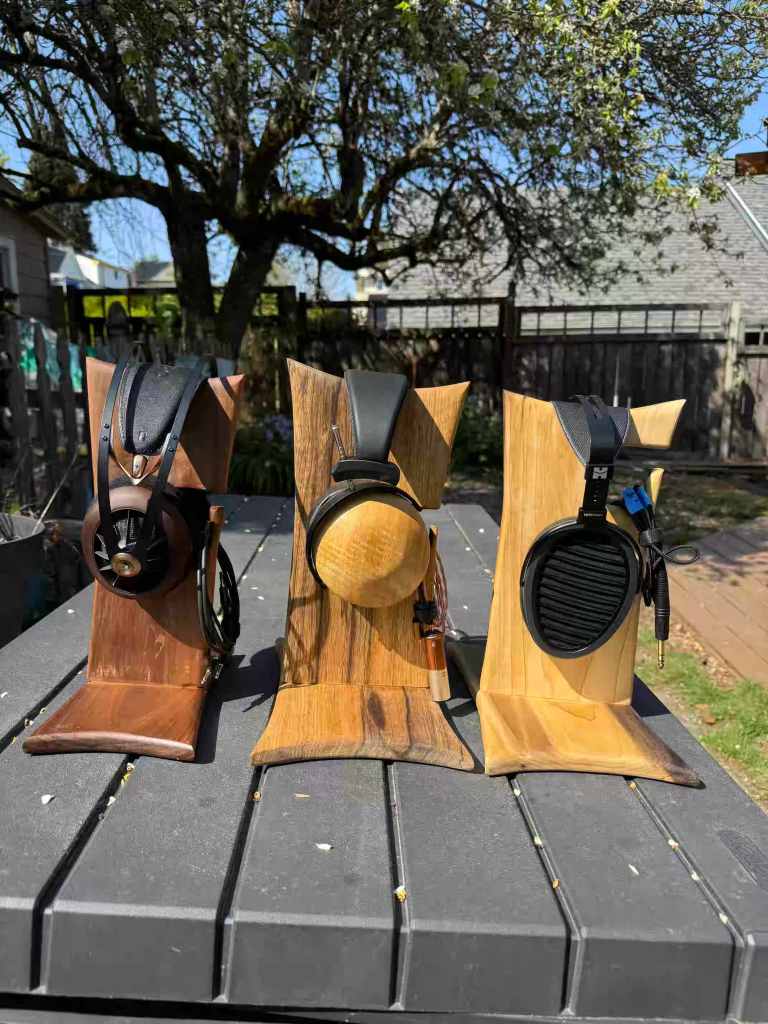
    I decided that I needed some Funemployment principles, and one of them was that I needed projects. I needed to keep busy, mentally and physically, and I needed some mental challenges to intersperse with endless job applications. I thought, I enjoy woodworking, and I have a collection of headphones; why not combine the two and build a custom headphone stand worth of the single most beautiful possession I have, my beloved Bokeh. It was going to be a new thing, building something to be functional AND beautiful, so I thought it was time to join the local maker space, OlyMega, to get some help with the new skills I needed to develop. I showed up to the next Thursday night open house, and ended up having a conversation about the 3D printers scattered around the room. They were available, for anyone to use. It was … a revelation. After all, you can make headphones with a 3D printer.6 I did finish the stand project (and I’m very proud of the results), but quickly the obsession turned to 3D printing.

    I’m not great with my hands. I can make things that function, that fill a need. I’ve never been the guy who can make things that are pretty. (That was always Dylan in my house.7) I have a strongly visual memory and brain, and I’m good at both spatial reasoning and analyzing how objects exist and interact, but that has never translated into making something. 3D design, however, lets me think and build with polygons and design and redesign and adjust and prototype. It turns out this plays to my strengths. Which, honestly, maybe shouldn’t be surprising? My favorite class in high school was Drafting,8 and I really did think I’d end up as an engineer.

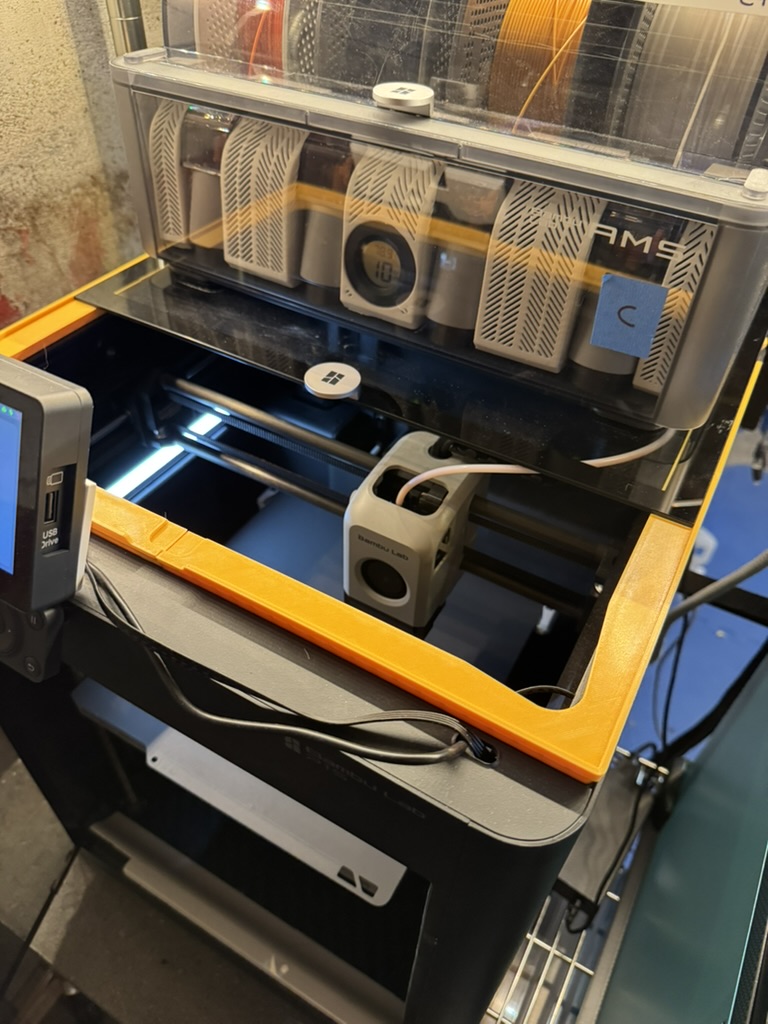
    It was great. I picked a bunch of projects, broke them down into one or two hour chunks, and started printing them a piece at a time when I was in the space. But … then I got impatient. I got a job!9 I had made a deal with myself that when I got a job, if I hadn’t used my entire severance, I’d buy myself a good pair of headphones as a celebration. I decided to change it up and buy myself a 3D printer instead, and build the pair of headphones. After some research, I went with one of the options I’d been using at OlyMega, the Bambu Labs P1S.10 And I loved it. And love it. And the journey continues.

    The Prints

    There’s that old bromide that everything is a nail to a hammer. And, as it turns out, everything is a 3D project to a man with a 3D printer. I think of my prints as falling into three big categories:

    1. Functional prints.
    2. Fun prints11
    3. Gift prints

    Functional Prints

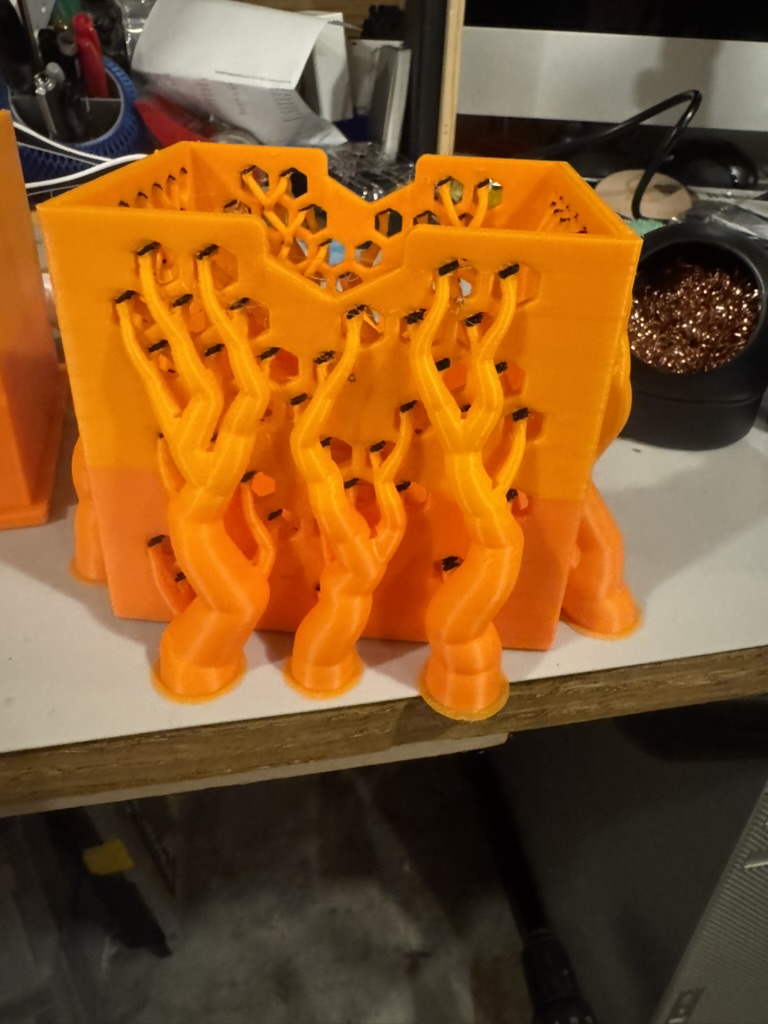
    There are two kinds of people in the 3D printing community: 1) people who love 3D printing, and 2) people who love 3D printers. The danger of buying a 3D printer is that the printer becomes the project, rather than a tool to complete projects. And I certainly fell prey to this for a bit; the first half dozen prints I did were all things to increase the productivity of my printer, rather than actual prints for their own sake. Some of this is intentional; Bambu wants you to print a Benchy (a model tugboat that tests a bunch of functionality), a scraper handle (for the included razor blade), and by default the P1S spits its poop (the filament it ejects when loading, unloading, or changing its materials) out the back with no receptacle, so you need a poop chute if you don’t want your floor covered with bits of plastic.

    But, in the end, I bought my printer to make stuff, not to optimize a printer.

    Up front, I didn’t do as much functional printing as I expected. The thing about functional prints is that they’re largely pretty specific and adapted for your particular situation. Like a lot of 3D newbies, I mostly stuck with other people’s designs up front. As I got more comfortable with the software (and the hardware), I started doing some customization.

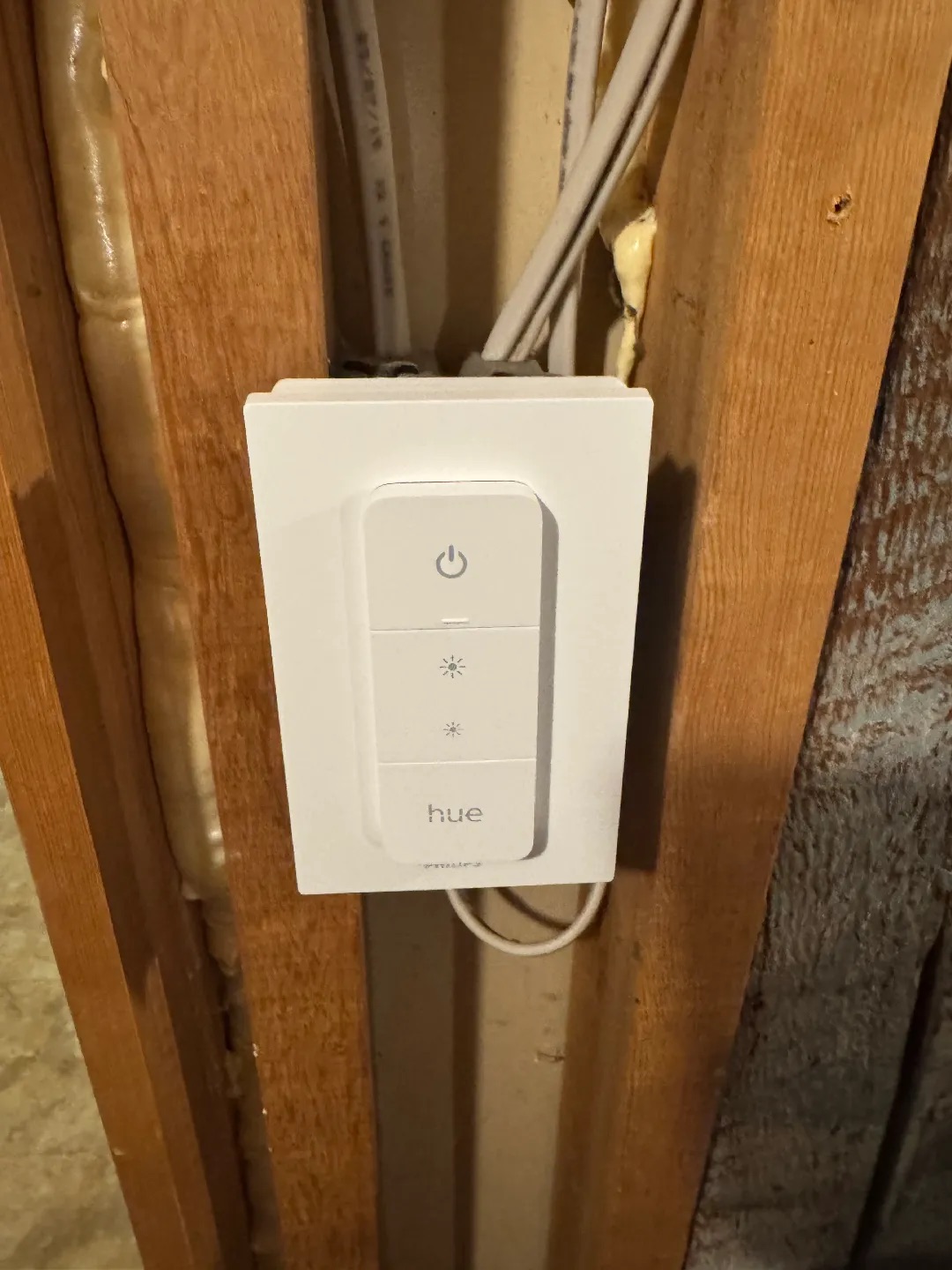
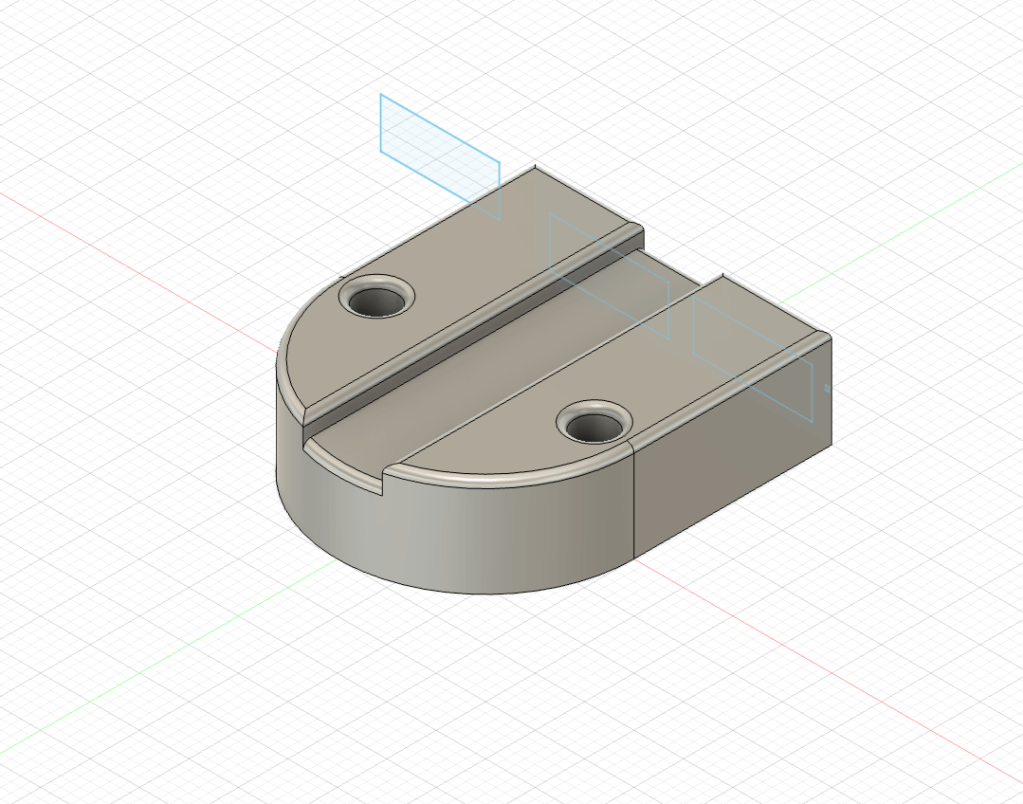
    My printer(s) live in my basement, which has six light bulbs on the same circuit, in four functionally different areas. Rather than paying an electrician to break up the circuit, I opted to use a series of Philip Hue lights (which I use in my living room, office, upstairs, and bedroom) to give me more control over where I have light. BUT, I found it basically impossible to stop hitting the switch every time I walk into the room. So, I took an existing design for a outlet cover for a light switch and modified it to 1) cover the existing light switch and 2) let me mount a Philips Hue switch:

    Is it perfect? Heck no! If I hit it too hard, the plate slips off of the outlet frame, and the magnet isn’t the best way to keep the smaller switch mounted. Would I do it this way if I did it today? Nah; I’ve got some ideas on how I’d change it if I did it again today. BUT: it WORKS. I walk into the basement and I hit this switch instead of flipping off the entire circuit.

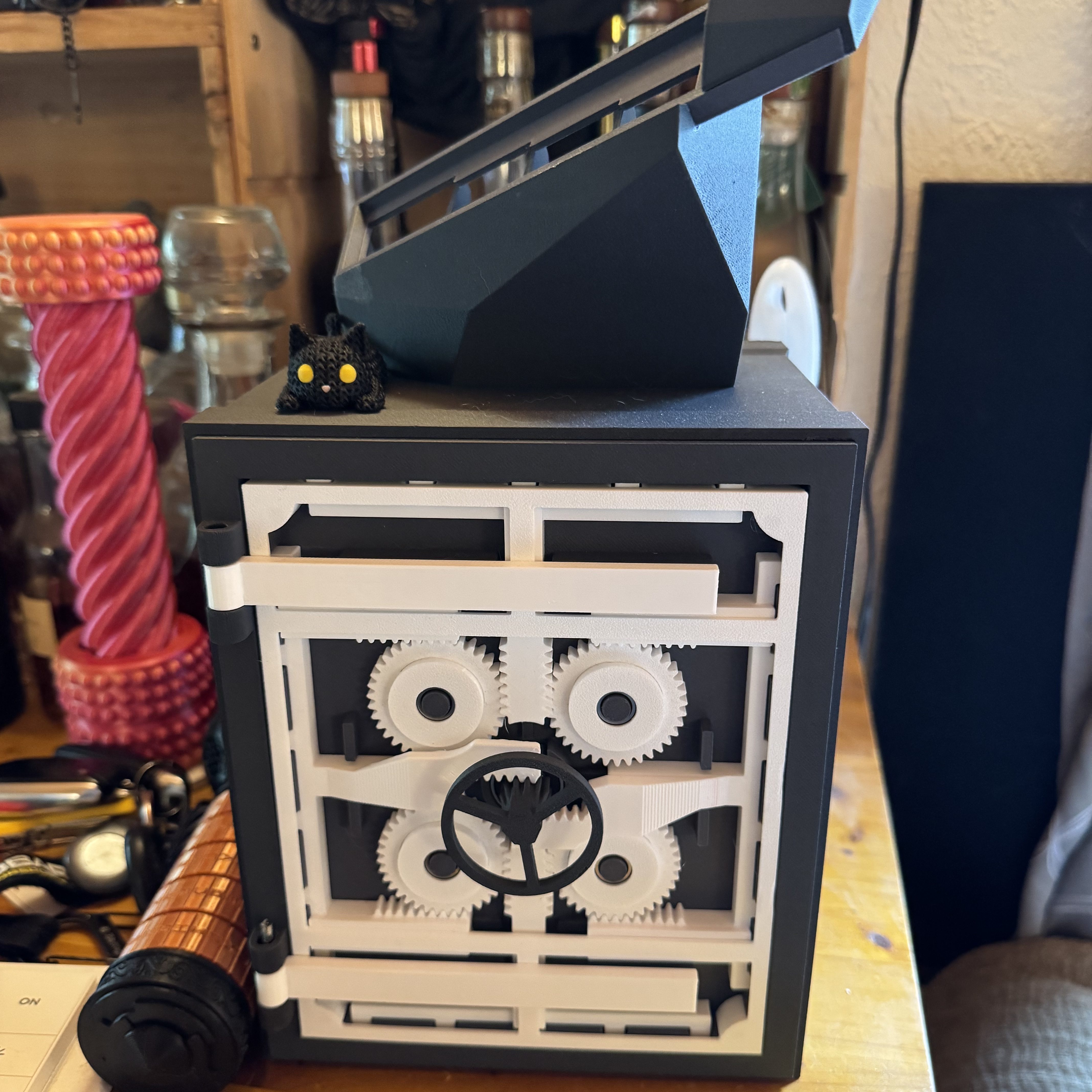
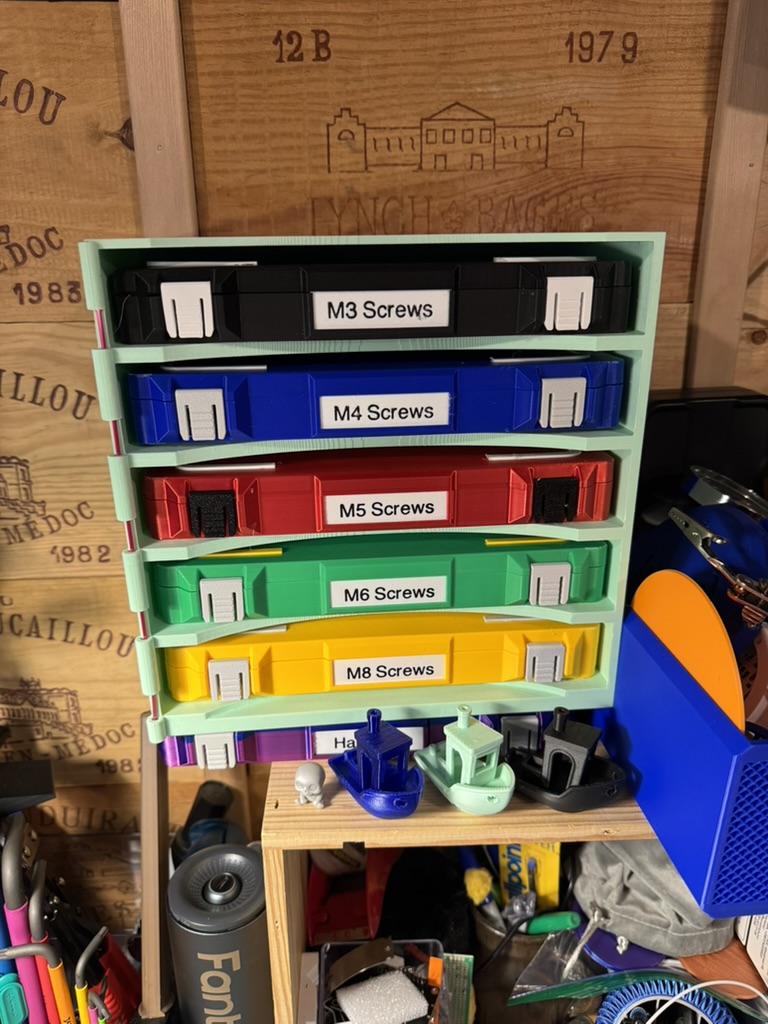
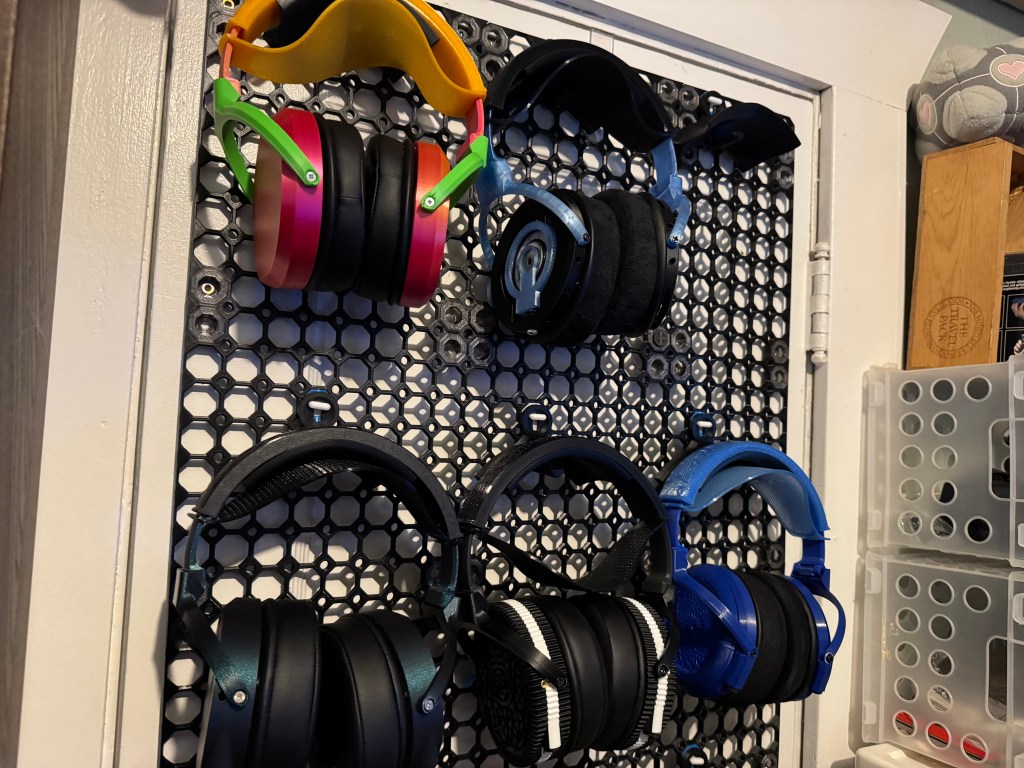
    These are honestly the most fun kind of print for me; there are usually some things on one of the various STL websites that are close, but they almost always require some adjustments and development. There’s something about measuring, designing, and rapid prototyping that scratches a very specific itch in my brain. I’ve done a bunch of these at this point: under-desk drawers, headphone hangers, a Multiboard12 for my office, guards for my mom’s stove to avoid her (or her dog) from bumping the burners on, screw sorting bins/cases, and a variety of little plastic cases for specific applications.13

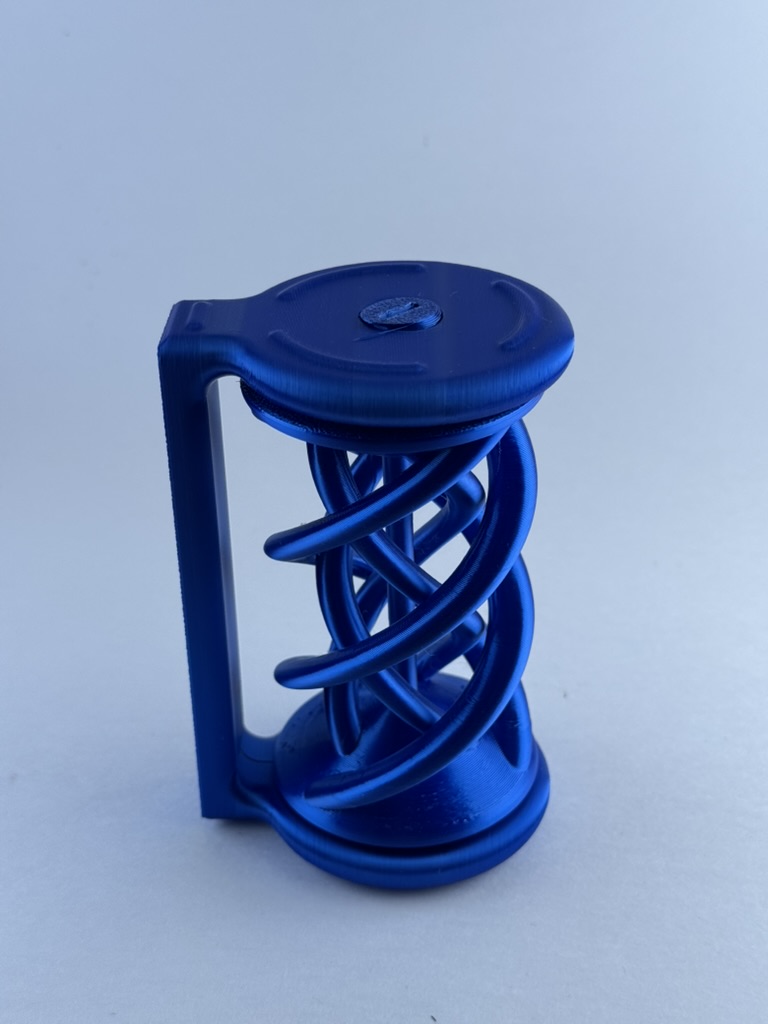
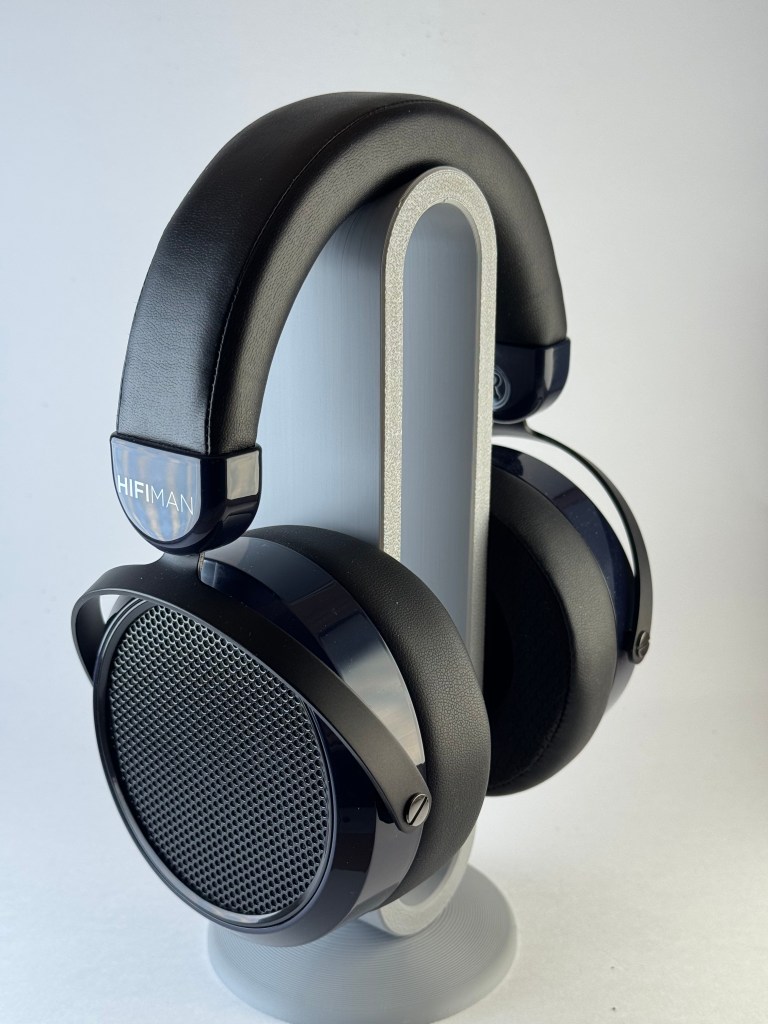
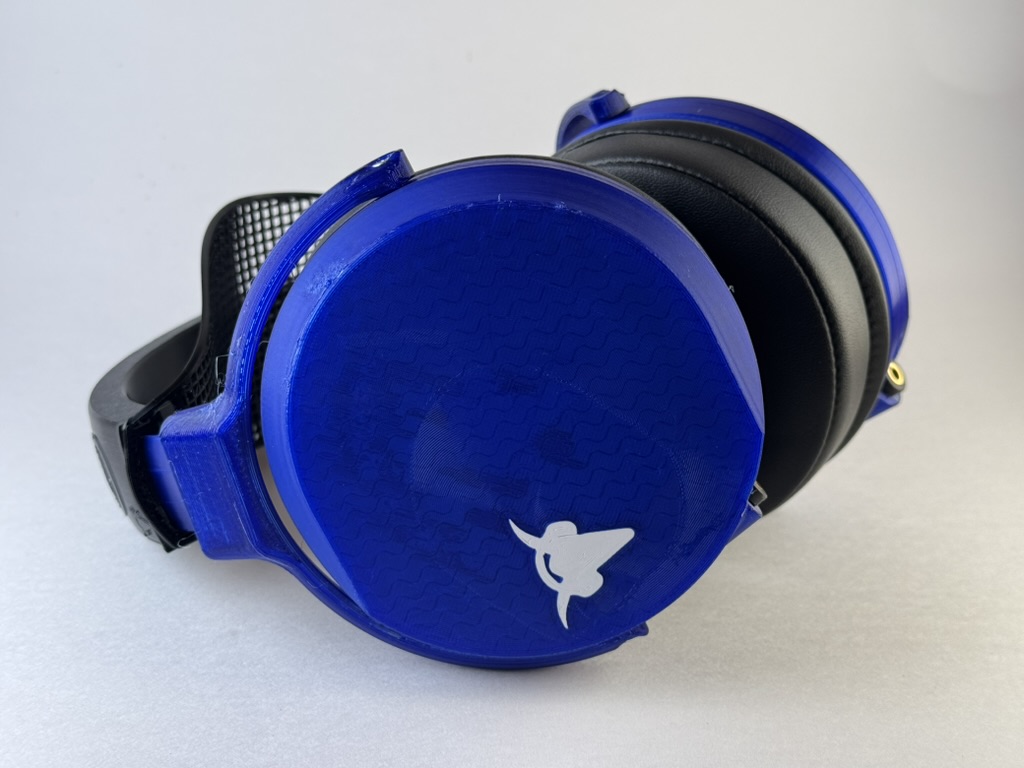
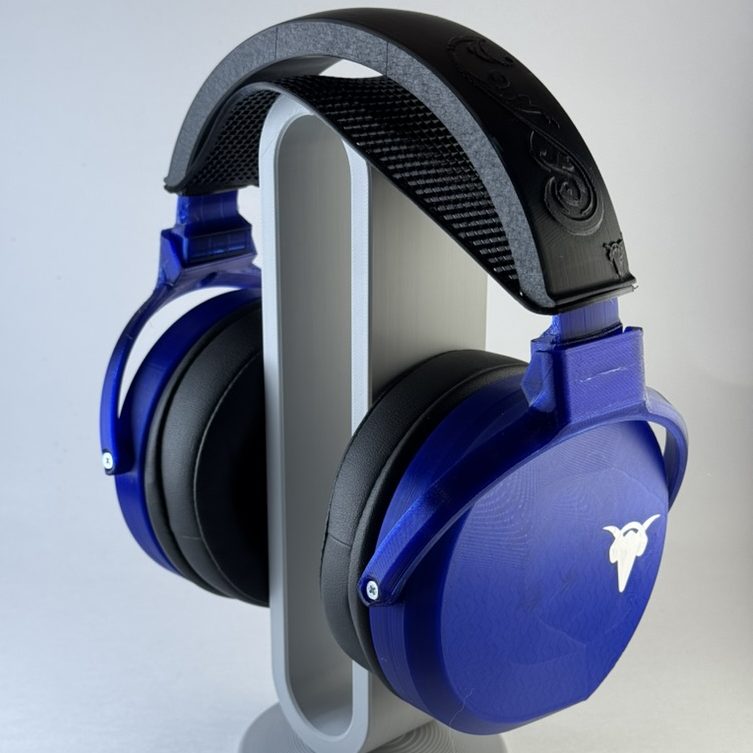
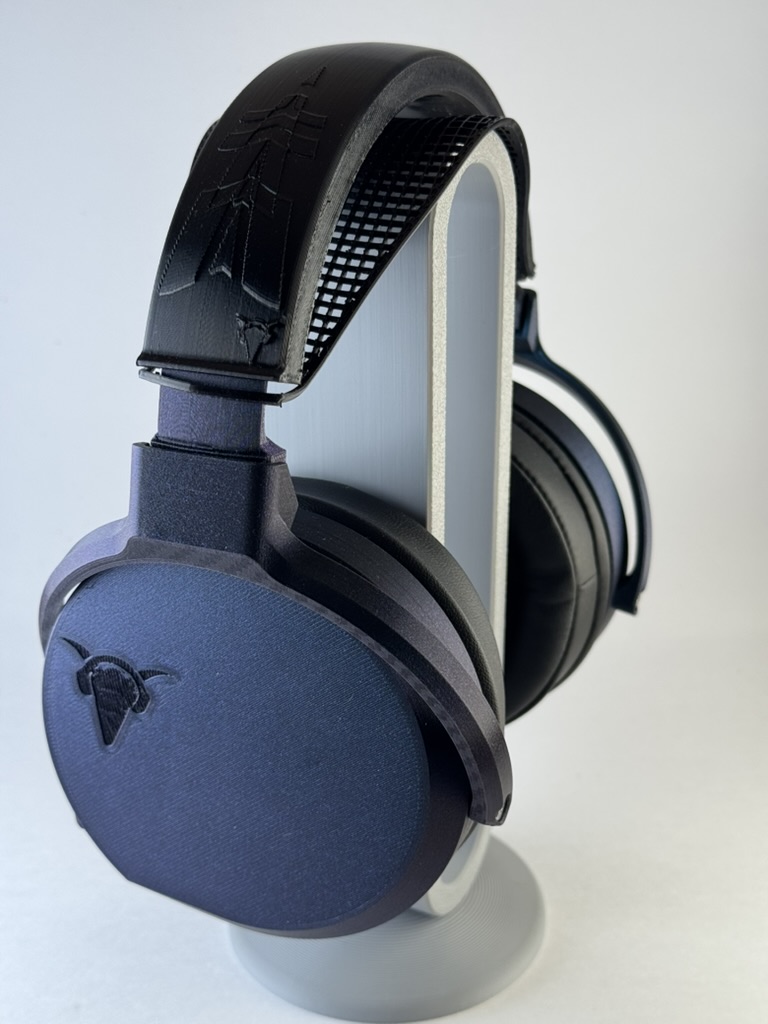
    And, of course, because I’m me, I’ve figured out how to make headphones … and made a bunch.14 Seven variations on give major models, so far. Are they the best headphones I’ve ever heard? Nah, I’ve got a pretty good collection. But are they really good-sounding, particularly when you consider how much I paid for parts and printing? Absolutely, and honestly I’ve been listening to the Golem-modded Ouroborous more than anything over the last few weeks.

    I’ll do reviews of these in the coming weeks, but both of the open-backs (the Capra Audio Satyr 3 and the DMS Open Omega) are really excellent implementations of $10 drivers, and the closed backs (Ouroboros, Golem-Modded Ouroboros, and Oreoboros) are truly excellent, particularly given that they use drivers stripped out of an pair of pretty lousy gaming headphones.

    Fun Prints

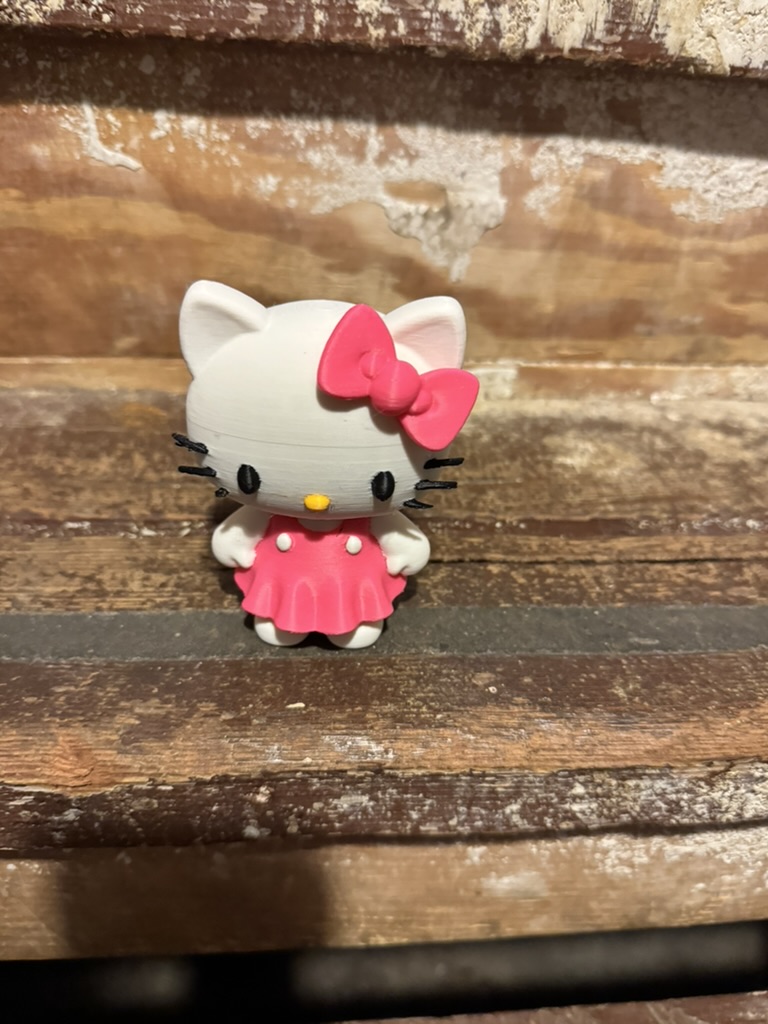
    One of the first things I did after I did a bunch of quality of life prints was start printing fidget toys, starting with a crystalline dragon. It also turns out that many of my friends, and their kids, and their nieces and nephews are big fans of little plastic things so I’ve had a grand ole time printing a variety of toys and art projects. Whether they’re tiny highland cows, dragons, fidget spinners, or Magic: the Gathering paraphernalia.

    Some are more “practical” than others, but they’re pretty much all a good time.

    Gift Prints

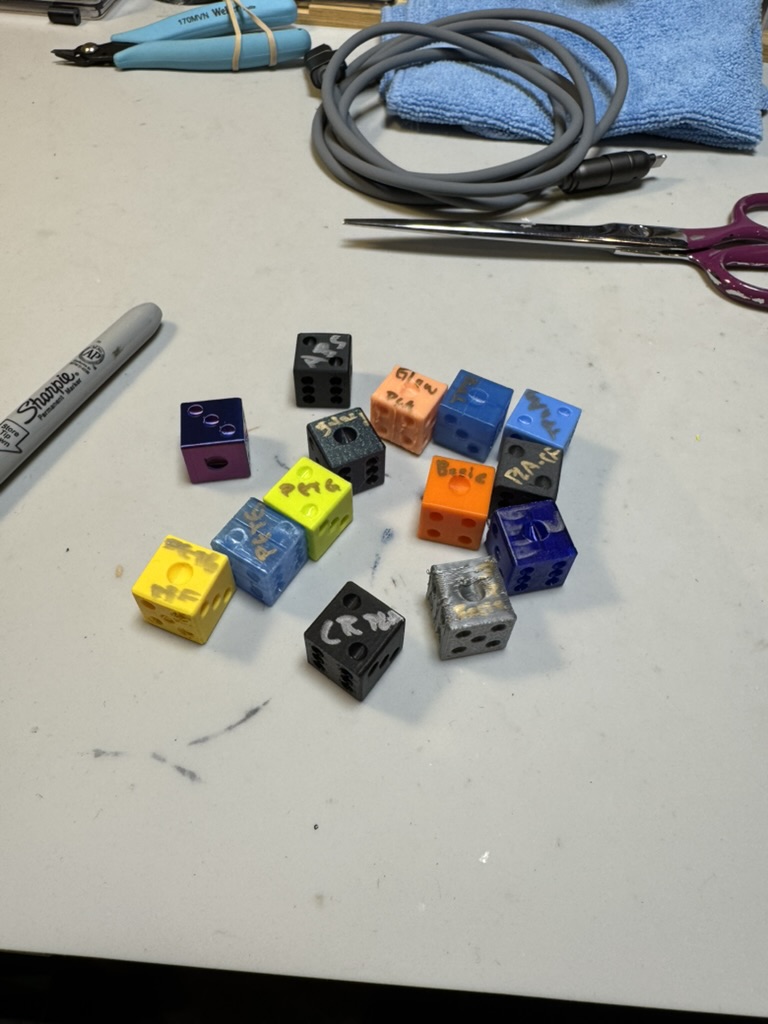
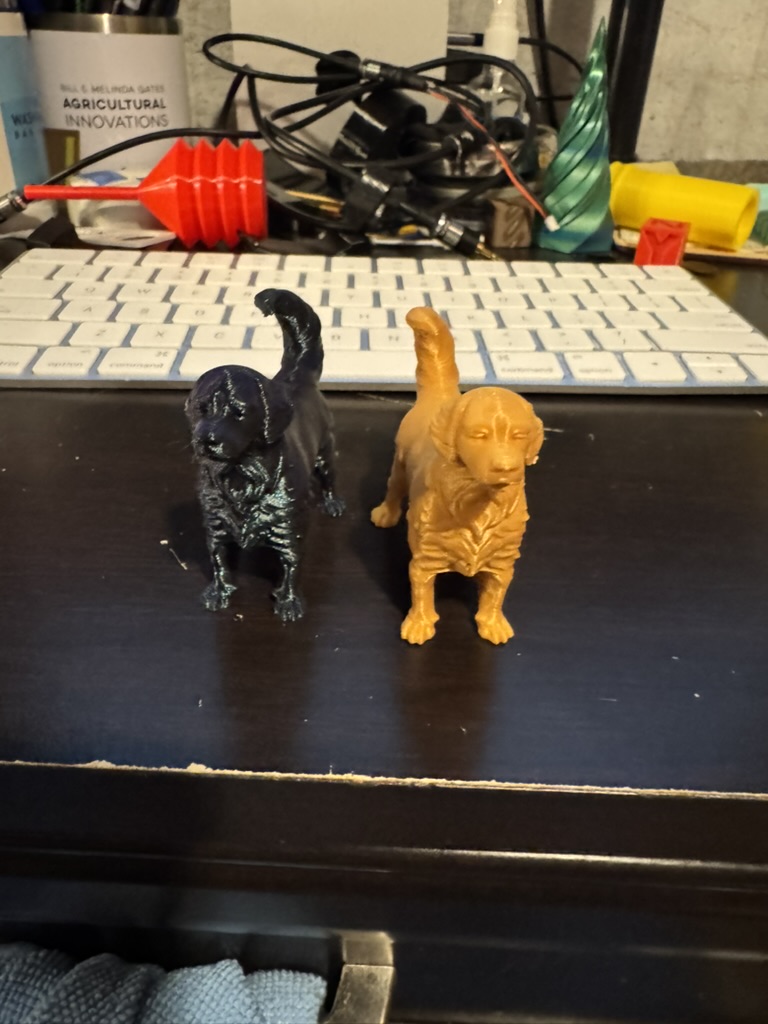
    It’s also just plain fun to make things that other people will enjoy. My girlfriend has a couple of adorable cats, so I have done fun prints of them (and Denali!). My best friend designs table top games, so I’m helping him with developing dice.

    The Process

    You can, of course, spend thousands of hours printing without ever doing any designing yourself. There are a dozen websites that collate .STLs15 and .3mfs16, either free or for small fees for the artists, and my experience in this community is that people are incredibly generous with their time and assistance if you run into issues. That said, I think it’s worth learning at least a little bit about how to manipulate objects, and while it’s a little intimidating right out of the gate, it’s not as complicated as it may seem at first. I started by working within Bambu Slicer (the tool that Bambu provides), which gives you very basic options like increasing/decreasing sizes, changing colors (if you have the right filament), and adding and subtracting basic polygons (cubes, cylinders, etc.), and it was a lot of fun. At some point I moved to Fusion 360, a free-to-consumers 3D modeling tool that lets you start with 2 dimensional sketches and turn them into 3D objects you can then make in the real world.

    There’s just something magical about taking a thing in your brain and turning it into an object in the physical world. As a person who has always admired and been a bit envious of artistic people who are able to express themselves through drawing or sculpture or other art forms, this lets *me* do that same thing in a different, brain-itch-scratching way.

    Conclusion

    I’ll be doing reviews of my various 3D printers over the next few weeks. I have enough experience under my belt with the various Bambu offerings that I have some pretty strong feelings and recommendations, but for anyone who is interested in this space, it’s a pretty fun one. Just … make sure you order more filament than you think you’ll need.

    Much more.

    So, so much more.

    1. Sorry, Kristi. Love ya! ↩︎
    2. Well, at least outside of Reddit and a couple of 3D printing groups/forums. It’s probably displaced audio as the top topic of discussion for me. ↩︎
    3. Also I think an Australian champion ballroom dancer? But I might be making that part up. Suuuuper interesting guy, as much as a couple of his classes drove me crazy. ↩︎
    4. Hey Robin! Howdy, Lane! ↩︎
    5. Including custom shelving units. ↩︎
    6. To the shock of precisely zero people. ↩︎
    7. Seriously, he made a copper scultpure in college that I think about at least once a month with avarice in my heart. ↩︎
    8. A mix of AutoCad and manual, pencil drawing. Brennan and I have nothing in common other than his having help design my childhood home, but that class scratched a VERY specific itch in my brain and I think about it regularly a quarter century later. ↩︎
    9. It’s awesome. ↩︎
    10. I’ll do a review at some point. ↩︎
    11. I.e., mostly headphones. ↩︎
    12. A specific category of pegboard built around a hex system rather than pegs. It’s … complicated but pretty cool? ↩︎
    13. A remix of which became my (so far) most downloaded 3D model on Maker World. ↩︎
    14. Are these really functional prints or fun prints? I’ll leave that to you to decide. ↩︎
    15. The file format for individual objects or groups of objects. ↩︎
    16. The file format for a project. ↩︎
  • [ORIGINAL MSRP $330 for the Xbox version ($300 for the Playstation/PC version). Purchased from Amazon for $329 in June 2025]

    [Tl;dr: The Audeze Maxwell are a really good pair of headphones purely from a sound quality perspective. They are, however, let down by their software (both on board and on a mobile device/desktop) and general design. When they are working, they’re great. Getting them set up, though, leaves much to be desired. In a world where the Fractal Scape is 30-60% cheaper, I’m hard pressed to recommend them to anyone who doesn’t need the ability to connect to an Xbox. It’s a little disappointing, because they really do sound good; they’re just annoying enough to use that I’d rather grab something else for my own use cases.]

    Scores:

    Cost-agnostic: 6 out of 10 Denalis

    Cost-sensitive: 5 out of 10 Denalis

    Bass1MidsTrebleSoundstageComfort/Fit2
    Audeze Maxwell4D(dongle)/ 2D(Bluetooth)3C3C4CC
    (more…)

    Pages: 1 2

  • [ORIGINAL MSRP $199. Purchased from Amazon for $199 in October 2025, price adjusted to $169.99 for Black Friday 2025, currently marked down to $139.99.]

    [Tl;dr: This is an absolutely phenomenal gaming headset, and an incredible value pick as a wireless headphone for music. I’m very impressed by this device all around; it’s both a really well-tuned headphone and a demonstration of the kinds of features that manufacturers should be including in their active headphone products in the future. It’s got a bit of flash (RGB lighting, wireless connectivity, low-latency dongle) and a lot of substance, with a great out-of-the box tuning and a really impressive, interestingly social parametric EQ tool that I devoutly hope becomes the norm in the near future.

    Color me entirely and unabashedly impressed. I will use these for gaming, but probably not for music but that’s mostly because I have a lot of great choices.

    (Editor’s note: I did, in fact, use them for music this afternoon while puttering around in my basement. Not having wires is nice sometimes, and my Bathys were in my office.]

    Scores:

    Cost-agnostic: 8 out of 10 Denalis

    Cost-sensitive: 10 out of 10 Denalis

    Bass1MidsTrebleSoundstageComfort/Fit2
    Audeze Maxwell4D(dongle)/ 2D(Bluetooth)3C3C4CC
    (more…)
  • This is a compilation of questions that I frequently respond to on Reddit and my stock answers, gathered mostly for my own convenience.

    Table of Contents:

    1. Question: Do I need a DAC or amp to run my headphones out of my computer?
    2. Question: Do I need a DAC/amp to run the Sennheiser HD 600/650/6XX/58X/660S/660S2 (aka “6X0s”)?
    3. Question: Is there a significant sound difference between open/closed back? 
    4. Question: I need a good, solid DAC/Amp stack to drive [headphone X]. What should I buy?
    5. Question: I’m new to this space and I want something to use for gaming. Do I want a closed-back or an open-back headphone?
    6. Question: Are wireless headphones really worse sounding than wired ones?
    7. Question: Okay, which wireless headphone should I get?
    8. Question: I’ve really enjoyed the audiophile headphones I got, but I seriously don’t understand how you can describe the quality of the sound and whatnot. How do I learn this?
    9. Question: How do I pick between the Bowers & Wilkins Px[7, 7S2, 8, 8S2] or the Sony XM[3, 4, 5 or 6]?
    10. Question: I’m down to either the Beyerdynamic DT 990 Pro or [insert virtually any headphone here]; which should I choose?
    11. Question: I’m buying my first good pair of headphones, and I want open backs under $250. What should I buy?
    12. Question: Do cables affect sound quality?
    13. Question: Are balanced cables worth it?
    14. Question: I live somewhere where I can only buy headphones online and without testing them, and I can’t afford to buy a bunch of stuff I won’t like. What do I do?
    15. Question: Do you use EQ to increase soundstage on your headphones?
    16. Question: Should I pick headphones based on what they sound like out of the box, or after EQ?
    17. Question: Will ANC headphones running lossless and passively via a 3.5 mm analog cable sound better than they do via Bluetooth?
    18. Question: Okay, I want to buy my first pair of audiophile headphones and I want to spend $1000. What should I buy?
    19. Question: Which streaming service should I use?
    20. Question: I want to buy my first IEMs, and I have a budget of $300. What should I buy?
    21. Question: Should I buy one pair of headphones for $1000, or four pairs for $250 each?
    22. Question: I just bought [headphone x], and I still prefer [cheaper headphone y] even though X should be a lot better. Am I doing it wrong?
    23. Question: Why should I buy a DAP?
    24. Question: Why should I buy an expensive headphone instead of just buying a cheap one and using EQ to make it sound like the more expensive version?
    25. Question: Does Sennheiser have any headphones which can compete with Sony in terms of ANC ?
    Question: Do I need a DAC or amp to run my headphones out of my computer?

    Answer: Most computers have high output impedance on their audio jacks, which changes frequency responses on a lot of headphones in unpleasant and unpredictable ways. I’d always throw at least a $9 dongle in the signal chain to get away from it, unless you’re using a modern Mac (I’d go with a $9 Apple or JCALLY dongle.

    Question: Do I need a DAC/amp to run the Sennheiser HD 600/650/6XX/58X/660S/660S2 (aka “6X0s”)?

    Answer: Folks exaggerate a whole lot about how hard the 6X0 are to drive; sure, they’re high impedance, but they’re also pretty sensitive. There are some things that are genuinely harder to drive (like the Hifiman HE6se v.2), but there aren’t that many things that a North American Apple dongle can’t drive. The HD 600 is arguably the hardest of the bunch to drive, and even it gets to a reasonable volume at 75% on an Apple dongle.

    For the 6X0, I personally really like the Moondrop Dawn Pro for $50/60, and it has a 4.4 mm Pentaconn out for when you want more volume. Paired with a $20 balanced cable from Amazon, it’s the best my 6XX have ever sounded (and I have a LOT of DACs/amps); I can’t explain why but that’s how I hear it.

    I’m intrigued by the Crongle but haven’t had a chance to get my hands on it yet. Really, almost any competent DAC/amp is going to be effectively transparent and won’t matter a whole lot. The KA11 is fine, so is the Fosi DS2, the Dragonfly series (though they’re OG USB-A), etc.

    Question: Is there a significant sound difference between open/closed back? 

    Answer: Not universally, but I generally think that open-backs are better sounding at any given price point. There’s really only one closed back under $500 that I choose to listen to regularly, and it’s that FT1 and there are a bunch of really good open backs in that price range.

    Question: I need a good, solid DAC/Amp stack to drive [headphone X]. What should I buy?

    Answer: Any of the basic stacks will work well (Schiit Modi/Magni, Topping E30II/L30II, JDS Atom amp 2/dac 2, etc.) for almost any headphone. Most people will notice minimal differences between them, if any.

    I like the Schiit stack for their aesthetics (and I like buying American in this space, supporting a great no-nonsense company with good customer support), but they all have their advantages and disadvantages. I just think audio quality ain’t one for any of them.

    There are a few random exceptions. For whatever reason, I think that Schiit stacks (particularly Magni/Modi and OG Bifrost/Asgard 2) don’t bring out the best in the HD 6XX or vice versa, so if I were running those I’d either stick with a Topping or JDS stack or upgrade to a nicer Schiit stack like Modius/Magnius or Mimir/Jotunheim 2).

    Question: I’m new to this space and I want something to use for gaming. Do I want a closed-back or an open-back headphone?

    Answer: Do you want to isolate yourself from the noises around you, or are you okay being able to hear the world around you? If the former, you want a closed-back. If the latter, you want an open-back (which generally are ‘better’ soundwise, though they often lose a little bit of subbass).

    The Fiio FT1 is the best closed back on the market right now under $500 to my ears. I know people like the 770 but to me it’s painfully trebly and I can’t wear it for more than 10-15 minutes without getting a headache. It’s a pretty shallow market.

    For an open back, I’d recommend the Fiio FT1 Pro for a fun tune, the Hifiman Sundara for a more neutral tune, and the Hifiman Edition XS if you want a bit more bass. My personal pick among those three is the Sundara.

    For gaming you want something with a decent, consistent sounstage, a not-overblown bass and treble tune, and reasonable comfort for long sessions. Any of the ones I’ve recommended will meet those requirements.

    Oh and get a $10 dongle DAC to get away from your motherboard’s sound, which are often pretty bad (high output impedance). If you’re in North America, Apple’s is one of the best. If you’re not, JCALLY makes a couple of good options.

    Question: Are wireless headphones really worse sounding than wired ones?

    Answer: Wireless is THEORETICALLY lower quality; in practice, a well-implemented Bluetooth headset can be not that much different in a lot of listening environments. As much as I love my wired headphones (and I do love them), I’m a mostly Bluetooth listener when I’m out and about.

    Question: Okay, which wireless headphone should I get?

    Answer: My favorite wireless headset at this point is the Focal Bathys, though it’s more expensive than I’m mostly comfortable with (might be able to find an open-box or Black Friday sale under $500, but less than that will require buying used which is iffy with battery-carrying products). It has an excellent DAC mode to run lossless plugged into a source. https://daemonxar.com/2025/06/21/focal-bathys-review-premium-sound-quality-in-anc-headphones/

    The AirPods Pro 2 is my favorite earbud and they live in my pocket. I use them for public transit, power tools, and even concerts. The new Pro3 is better in most ways, except their tuning is a little less to my preference. Their ANC is really, really good, even compared to over-ears, and I’d take them over almost everything except the Bathys and the Sennheiser Momentum 4.

    The Momentum 4 is the best budget pick to my ears. Anything at this price point is going to be a compromise, and while the out of the box tune isn’t my favorite, it’s pretty easily corrected using the built-in app. The Sonys, B&Os, and B&Ws can’t be corrected to a non-weird tune without a third-party app. https://daemonxar.com/2025/06/29/an-apology-to-sennheiser-momentum-4-fanbois-theyre-better-than-i-thought/

    Question: I’ve really enjoyed the audiophile headphones I got, but I seriously don’t understand how you can describe the quality of the sound and whatnot. How do I learn this?

    Answer: Listen to a lot of headphones. Watch good reviews and listen to those headphones. Find a credible source of graphs … and listen to the headphones, before and after you look at the graphs. There’s a lot of nuance, but rocket surgery it ain’t; just a lot of repetition and the realization that while there are more and less standard ways to use language to talk about headphones, at the end of the day it’s all a bit loosey goosey.

    Or your ears don’t work that way, which is totally fine and means this will be a much less expensive hobby for you!

    Question: How do I pick between the Bowers & Wilkins Px[7, 7S2, 8, 8S2] or the Sony XM[3, 4, 5 or 6]?

    Answer: To me, the PX8 aren’t really any better than the XM4-5-6; they’re arguably even more of muddy bass cannons (especially in the midbass) and they have a WILD treble response. None of them can be corrected in built-in apps; the on-board EQ isn’t fine-grained enough to kill the treble peaks I hear (and that rigs measure on it). I don’t mind using EQ (and I get full parametric EQ from Roon on most devices I use), but I generally don’t want products I HAVE to use a third party tool to fully enjoy which takes these out of consideration for me. The Sonys have better ANC if you can get a good seal, but that’s challenging for a lot of people.

    The only ANC headsets that I think have really good sound quality are the Focal Bathys and the Momentum 4 (after a little EQ in the app).

    Question: I’m down to either the Beyerdynamic DT 990 Pro or [insert virtually any headphone here]; which should I choose?

    Answer: Definitely not the 990; they’re a super weird tune.

    Question: I’m buying my first good pair of headphones, and I want open backs under $250. What should I buy?

    Answer: There are a lot of great open backs in this general price category, and if you don’t live in the US, I’d commend three to your attention: the Fiio FT1 Pro, the Hifiman Edition XS, and the Hifiman Sundara. The Fiio FT1 Pro would probably be my pick because I find the treble on the Edition XS challenging and as much as I love the Sundara, the Pro are just FUN to listen to. Short version is that the XS are bassier and more treble-y, Sundara the most “neutral”, and the Pro somewhere in the middle. I did a deep dive on the comparisons on my recent Sundara review: https://daemonxar.com/2025/10/26/hifiman-sundara-a-classic-in-open-back-headphone-design/#value-comparisons

    If you live in the US, the answer is almost certainly the Sennheiser x Drop HD6XX, a headphone I still listen to a lot despite having a lot of “better” options. It lists right around $200, but is often on sale closer to $180. It’s a relatively demanding headphone, so you might want to consider a desktop amplifier but it runs fine out of an awful lot of devices or with an Apple dongle.

    Question: Do cables affect sound quality?

    Answer: This is a loaded question and a lot of ink has been spilled on it.

    Your mileage may vary, but to me, cables are cables are cables; unless they’re incredibly poorly made or faulty I personally can’t tell the difference between a $20 cable and a $200 one, even on VERY expensive, highly-resolving equipment. I buy cables for quality of life, not quality of sound.

    This means I consider things like microphonics (if you rub the cable or bump it against something, can you hear it in the headphone?), coiling, drape, length, terminations, aesthetics, and material. It’s your money, you can do what you want. But I’ve swapped almost entirely over to Hart interconnects; not because they make my headphones sound better, but because of the sheer convenience of being able to swap amplifiers and headphones quickly and easily. And a lot of headphones (*cough* HE6se v2 *cough*) come with really, really awful cables.

    For what it’s worth, I think this is true of adapters as well. A 3.5 mm cable with a 6.35 mm adapter (competently made) is indistinguishable to me from a 6.35 mm cable.

    Question: Are balanced cables worth it?

    Answer: Meh. No? Probably not? But balanced cables are compatible with single-ended systems with the right adapter, and using an adapter to plug a single-ended cable into a balanced system will end in tears, AND there are some components that are balanced-only (like the Apos Gremlin), so I mostly buy only balanced cables at this point because I’ve got a full set of balanced –> single-ended connectors. [Other than for single-ended only headphones, obviously, but I only have a couple of those left.]

    The one caveat here is that for whatever reason, I think the HD 6XX sounds best running balanced out of a Moondrop Dawn Pro dongle. I cannot explain it, but I’ve done the blind testing a couple of times.

    Question: I live somewhere where I can only buy headphones online and without testing them, and I can’t afford to buy a bunch of stuff I won’t like. What do I do?

    Answer: Same, bruh. Same.

    Just like wine or whiskey, nothing really substitutes for trying a pair of headphones on your head, in person. BUT, if that’s not possible, find a reviewer with similar taste to you and start with the things they recommend. For me, it’s Resolve from the Headphone Show and Mark Ryan at Super* Review; I don’t 100% line up with them but we like a lot of the same things and I can be reasonably confident I’ll like the things they like and dislike the things they dislike (with the exception of weird things like the Audivina). Beyond that, if you’re buying online pick retailers with really good return policies like headphones.com (though watch that fine print!), or massive retailers like Amazon that price the cost of frequent returns in.

    Question: Do you use EQ to increase soundstage on your headphones?

    Answer: I do not, for a couple of reasons: 1) I don’t know how to EQ to increase the perception of soundstage (and my intuition is that it’s not just the FR, but also build/construction), 2) to the extent we know anything about what makes something sound wide it seems to be treble-related and I’m not the biggest fan of elevated treble, and 3) like a lot of folks at my stage in the journey, I’ve decided I personally don’t care all that much about soundstage. I don’t want everything compressed in between my eyeballs, but beyond that for music I mostly don’t care. If I want to hear something separated a lot in space, I’ll run an ATMOS mix.

    Question: Should I pick headphones based on what they sound like out of the box, or after EQ?

    Answer: Without a good rig and a LOT of time, you’re not going to be able to EQ out all of the issues with a bad pair of headphones even with parametric EQ. Contrary to popular opinion on Reddit, you can’t actually make any pair of headphones sound like any other pair of headphones; at best, you can make a good headphone sound great and a shitty pair of headphones sound … less shitty.

    For me, as much as I enjoy having access to EQ for most of my listening, I don’t always use it so I prefer to get a pair of headphones I think sound good out of the box. Any improvements I can make with parametric EQ are just the icing on the cake. This also avoids a situation where the first minute of every listening session is me figuring out if I’ve applied the right EQ on the right device (with some exceptions, EQ on a pair of passive headphones is a the source, amp, or DAC level and aren’t as simple as just plugging the headphones in).

    Question: Will ANC headphones running lossless and passively via a 3.5 mm analog cable sound better than they do via Bluetooth?

    Answer: No. Don’t use active headphones passively unless you have no other choice; I’ve never heard one that sounded better any way other than that which it was designed for. The headphone is built around the speakers, DAC, and amp working together, and when you try to drive them passively you screw with the tuning and rarely in ways that will work well. Active headphones often rely on digitial signal processing (“DSP”) (aka EQ) to address flaws with the underlying tune by cleaning up treble spikes, adding or reducing bass, etc., and when they’re running passively, that DSP is generally turned off. This leaves you with only the hardware and any physical damping built into the headphones, and that rarely ends well.

    If you want to use headphones passively, get a pair of passive headphones in the future, or a pair of bluetooth ones that can run in DAC mode, plugged in via USB-C.

    Note: this doesn’t apply to running ANC headphones in DAC mode (i.e. connected via USB-C), which can let you get lossless signals via the fully-integrated headphone system. It’s actually my favorite way to listen to the Focal Bathys.

    Question: Okay, I want to buy my first pair of audiophile headphones and I want to spend $1000. What should I buy?

    Answer: A pair of $200 headphones first.

    Seriously, it sucks to drop a lot of money on a thing only to discover that you don’t like it. I’ve done this with cars, firearms, whiskey, power tools, 3D printers, and headphones and it doesn’t feel great.

    Question: Which streaming service should I use?

    Answer: Tidal is my choice out of the bunch. Better recommendations, good catalog, reasonable pricing, integration with Roon, etc., though I use Apple Music out and about on my phone. I’ve used Pandora, Amazon Music, and briefly Qboz.

    Spotify is both a shitty company to support and not a great streamer (they appear to use different masters than most streamers, and not in a good way).

    Question: I want to buy my first IEMs, and I have a budget of $300. What should I buy?

    Answer: Buy one, two, or three of the following $20 IEMs to figure out 1) if you like/can comfortably wear IEMs for extended periods and 2) which tuning is your preference: Tangzu Wan’er II (neutral), Moondrop Chu II (mild v-shape), and 7Hz x Crinacle Zero:2 (bassy bois). All three have clear upgrade paths once you figure out what YOU like/want.

    There are really good IEMs at every price tier, and a great pair of $100 IEMs is often going to be better than a great pair of $20 IEMs (at least in terms of durability, build quality, accessories, etc., as well as sound quality). Speaking from personal experience, though, it sucks to buy a $100 or $200 pair of IEMs only to realize that you either dislike IEMs generally, or REALLY don’t like the tune of the pair you picked.

    Question: Should I buy one pair of headphones for $1000, or four pairs for $250 each?

    Answer: This is a great philosophical question. Variety is the spice of life. I have thought about consolidating to a single pair of each type (open, closed, wireless), but I enjoy most of my pairs and I like being able to pick the right pair based on what I’m listening to/in the mood for.

    I’m mid process of selling some of them to fund a pair of Empyrean IIs, though.

    Question: I just bought [headphone x], and I still prefer [cheaper headphone y] even though X should be a lot better. Am I doing it wrong?

    Answer: Nope! One of the joys of audiophile-dom is that we all have our own preferences, and you shouldn’t give a damn if I like the same pair of headphones that you do, or that I hate the pair you love.

    I will note that I’m a big believer in the concept of brain burn-in; for me, I have heard very few pairs of headphones that I liked immediately, particularly with new or interesting tuning. Our brains get used to hearing a particular sound a particular way, and it can be quite jarring to hear things differently. For me, I won’t start critical listening for a review until I have 10-15 hours of background listening with a particular pair of headphones because I don’t trust my ears to really hear them until my brain has adjusted.

    Question: Why should I buy a DAP?

    Answer: You probably shouldn’t.

    Because you want to, and no other reason. You’re not going to get better quality out of a DAP than you will out of a modern smartphone and DAC/amp; the question is whether you have a use case or a desire where you want to not be tethered to your phone.

    I personally use a couple of DAPs (Snowky Echo Mini, Echobox, formerly an Hiby R3 Pro) because I’m bad at ignoring smartphone notifications and I like being able to drop it in a drawer while I’m working on something. They’re perfectly nice, but they’re not any better than my iPhone through a $50/200 dongle DAC (Moondrop Dawn Pro or Fiio BTR17 are my picks at those tiers). At any given price point, you’ll almost certainly get at least equivalent if not better performance out of a dongle than a dedicated DAP.

    Question: Why should I buy an expensive headphone instead of just buying a cheap one and using EQ to make it sound like the more expensive version?

    Answer: You shouldn’t, necessarily, buy an “expensive” headphone, but I would recommend buying a headphone you like the sound of BEFORE applying EQ. As to why you shouldn’t just tune a cheap headphone to sound like a good one … well, *you* almost certainly can’t, which is a pretty good reason not to.

    Assuming for the sake of argument that frequency response is the entirety of the perceived headphone experience (a pretty obviously flawed assumption in my book), the frequency response you hear from a headphone is the combination of at least three (and a half?) things:
    1) the sound waves produced by the drivers in *your headphone* as they exist in the world [this is both the sound waves produced by the physical and electrical designs of the driver AND (and this is the half thing) any EQ that you are applying to the signal)];
    2) the way that the chassis material, design, and damping affect the sound waves produced by the drivers in *your headphone*; and
    3) the way that *your specific physiology* changes those sound waves (head-related transfer function).
    Note the specificity, and individual nature of each of those three (and a half!) things.

    Now, I’m not saying that *no one* can make two wildly disparate headphones sound identical, but you would need four specific things (or to get spectacularly and improbably lucky):
    1) A good, consistent measurement of your headphone on your head (note: the specific unit you’re EQ’ing, not just the model you’re starting with. Unit variation, wear and tear, etc. are all real.)
    2) A good, consistent measurement of the headphone you’re EQ’ing towards, on your head, from the same measurement rig and under the same protocol as 1).
    3) A good understanding of the way your head affects headphones.
    4) A tool that allows to you to match 1) and 2), taking into account 3).

    Do you have those things? Probably not!

    You could in theory, however, given access to a good enough testing rig, a rigorous testing philosophy and process, a lot of time and patience, and a willingness to do a ton of iterations, potentially brute-force the problem through repetition. That is, unless you run into a physical limitation of the design (either in the chassis OR the driver itself1) or some of the other components.2 Best case scenario, and barring extraordinary luck, this would take MANY rounds of iterations and testing to get the frequency response aligned, and in some cases it wouldn’t be possible at all due to resonances or other physical limitations.

    Again, do you have these things? Probably not!

    And that’s okay! You don’t need to be able to turn a pair of $20 discount store headphones into a Focal Utopia. Frankly as cool as that would be, it’d be a boring-ass world to live in. And that’s not EQ’s super power; EQ’s superpower is turning shit headphones into okay headphones, okay headphones into good headphones, and good headphones into great headphones.

    Think about it this way: if it were easy to do this, don’t you think the market would be flooded with cheap headphones with cheap materials and drivers using DSP to mimic the $1,000, $2,000, or $5,000 headphones folks chase? That would also be a boring-ass world to live in.

    Don’t use EQ to replicate another headphone. Use it to make YOUR headphones better. The other way lies madness.

    Question: Does Sennheiser have any headphones which can compete with Sony in terms of ANC ?

    Answer: No, but man … there are VERY few situations in which the extra 10% ANC on low, consistent sounds matters to me. And that’s all you get with the Sonys over the M4; if you want better ANC on higher pitched, intermittent noises Apple is the way to go, and for virtually all use cases the M4’s low-frequency ANC is more than adequate.
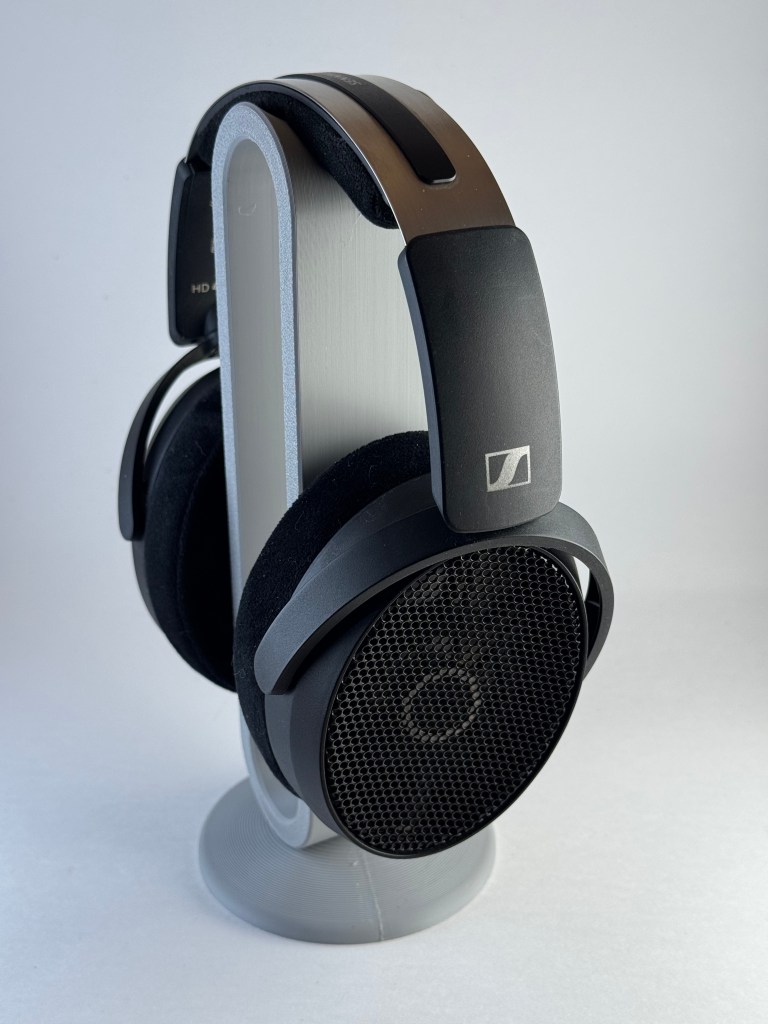
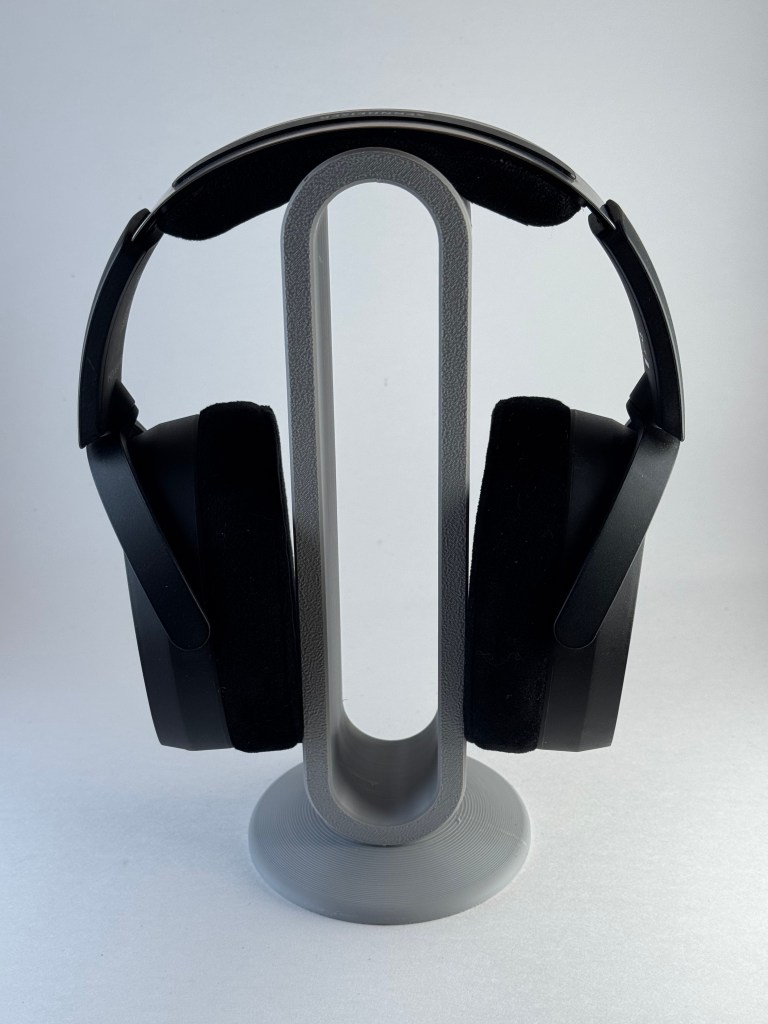
    1. There’s a reason that some headphones take EQ well and others don’t, drivers themselves can have physical limitations as can all of the pieces around them. 🤷‍♂ ↩︎
    2. If you don’t believe it, try swapping pads on a pair of headphones you know well. It can be WILD how much different they sound with different pads. See, e.g.: https://www.youtube.com/watch?v=_dP39oYqmfQ . ↩︎
  • [ORIGINAL MSRP $599.99, currently $479.99 from Sennheiser in November 2025 and similarly priced at Amazon.1 Purchased (lightly?) used from Hawthorne Stereo for $250 in October 2025.]

    [Tl;dr: The Sennheiser HD 660S2 is a worthy addition to the 6X0 family, slotting in somewhere between the HD 6XX and the HD 600. To me they’re pretty similar to the 6XX, which unfortunately makes them a challenging value proposition as they’re more than twice as expensive. And that’s kind of the overall story of this headphone; it’s a really great headphone at a not-so-great price point, and if Sennheiser would get a little more aggressive about its pricing, I could wholeheartedly recommend it. Unfortunately, Sennheiser seems slow to let the prices come down with this particular model, and has recently undercut it with the really excellent HD 490 Pro release.

    For the moment, if you can get it used for less than $300, it’s a great deal. At MSRP, it’s not my first choice (and especially not in the US, where you can currently order an HD 6XX for $179 from Drop2).]

    Scores:

    Cost-agnostic: 7 out of 10 Denalis

    Cost-sensitive: 5 out of 10 Denalis

    Bass3MidsTrebleSoundstage4Comfort/Fit5
    HD 660S23B4A3B2BC
    (more…)
  • [ORIGINAL MSRP $1,899. Currently available directly from Hifiman (though don’t buy from them) for $359 (open-box) and $333 (refurbished, EU only) in October 2025. Purchased for $359 (open box) from Hifiman.com before my customer service saga.]

    [Tl;dr: The HE6se v2 are a surprisingly great pair of planar magnetics, especially at their current price point. They’re incredibly detailed, have a wide soundstage, and do a great job of separating and placing instruments and musicians in space. For me, they fill a pretty specific niche in that they’re great for certain types of music (jazz, acoustic, etc.), and are a great candidate for dedicated critical listening as well as gaming, but might not be as good an option for more casual listening or bass or vocally-intensive genres. They’re worth a listen, regardless, particularly if you’ve never experienced the incredible detail, layer separation, and soundstage of a moderately high-end planar. And they’re cheaper enough than the Arya Stealth, my favorite objective headphone, to be worthy of serious consideration.]

    Scores:

    Cost-agnostic: 7 out of 10 Denalis

    Cost-sensitive: 8 out of 10 Denalis (3 out of 10 Denalis at MSRP)

    Bass1MidsTrebleSoundstageComfort/Fit2
    HE6se v22B3B3A4CB
    (more…)
  • A year ago, like a number of folks I saw Listener on the Headphone show wax poetic about how great a custom modded Capra Ouroboros that Golem provided to him was, and got curious about how to make that modded headphone. Golem has talked about it on Capra Audio’s Discord and provided a basic overview of the changes, but hasn’t yet made it into a Github post. I built a pair a few months ago, and … damn. I’m a closed back skeptic in a lot of ways (there are VERY few closed backs that I genuinely love), but this one just works for me. I tend to agree more with Resolve than Listener on most headphones, but he nailed this one. I’ve made a number of pairs of DIY headphones, and these are my favorite.

    This came up again on Reddit a month ago and after I mentioned how much I like them, some folks asked how to build the Golem mod, so I reached out via Discord and asked them if they’d be cool with me building one and making a post about it, and they graciously agreed. So here goes! [I’ll do a review of them at some point, but for today, just the build!]

    Caveat: I didn’t design anything about this. Full credit to Brian at Capra Audio for his contributions to this community (both this headphone and everything else he does) and to Golem for their painstaking tuning adjustments. My sole contribution to this is swapping in JST connectors for convenience of assembly and reassembly, and that’s just taking Brian’s great work on the Satyr 3 and applying a couple of lessons learned the hard way.

    If you have questions or concerns or need some help with troubleshooting, the Capra Audio Discord server is a great place to get some information or help. You get join it here. Brian’s original building instructions (for the non-Golem mod Ouroboros) are here and the video is here, both are great resources if you’re trying to figure out where something goes.
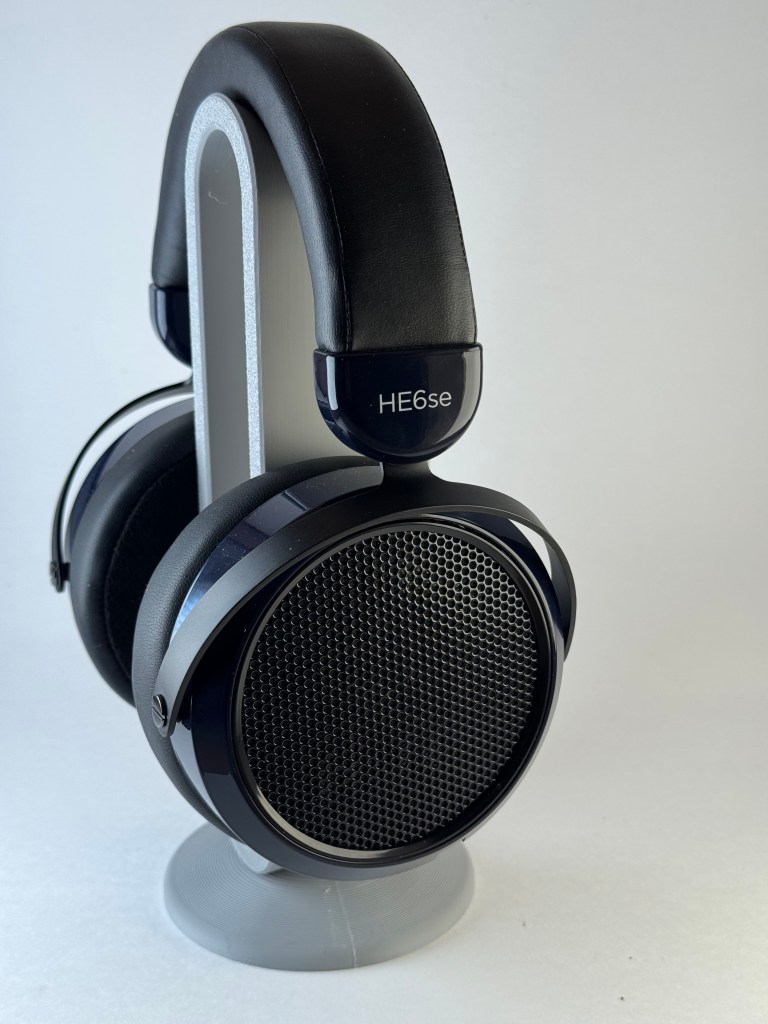
    [I have video playlists of the Recon 500 teardown and Ouroboros builds on Youtube.]

    1. Bill of Materials
    2. Assembly
      1. Prep the Driver:
      2. Solder/Insert Wires
      3. Prep the Cups and Grills:
      4. Assemble the Cup
      5. Assemble the Unit and Attach the Headband
      6. Get to Listening
    3. Final Thoughts

    Bill of Materials

    • Full printed Ouroboros.1 Unless otherwise noted, printed in PLA with 15% gyroid infill, 3 walls, and a .16 layer height.
      • 1 right2 earcup (3.5 mm version)
      • 1 left3 earcup (3.5 mm version)
      • 2 x driver mount
      • 2 x pad mount
      • 2 x driver grill
      • 2 x baffle retention plate
      • 2 x TPU gasket, printed at 100.2% and 100% infill, with .1 mm fuzzy skin on contour [Golem wasn’t sure this matters but it’s how he (and I!) did it.]
      • IF you’re using the Capra Headband:
        • 1 x right yoke (PETG or something similar recommended)4
        • 1 x left yoke (PETG or something similar recommended)5
    • A headband assembly. I recommend the Capra Headband v3,6 so here are the pieces I would recommend:
      • 1 x TPU band (any style)
      • 1 x TPU Capra Comfort Strap
      • Either7:
        • 2 x adjustment arms (static)
          or
        • 2 x adjustment arms (folding) AND 2 x pivot block
    • All of the components from the Ouroboros bill of materials here and the Capra Headband v3 materials here except8:
      • Nylon mesh (‘tea bags’)
    • Additional things not on the Ouroboros BOM:

    Assembly

    This is a four stage assembly process. First we prepare the driver, then we do our soldering, then we prep the cups and grills, then we assemble the cups, and then we finally assemble the whole headphone.

    Prep the Driver:

    Important to remember for all steps involving the drivers: the thin material over the front of the drivers is easily damaged or dented, and even small dents can affect the frequency response. Be careful while handling them; if you inadvertently damage them there are some ways to try to fix it but I have no personal experience with that.

    1. If you haven’t already, shuck the drivers out of the Turtle Beach Recon 500s.
    2. Remove wires between the inner and outer speakers.
    3. Remove the capacitor (careful not to rip off the solder pads)
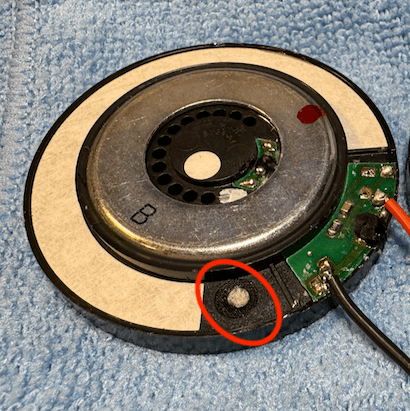
    4. Place a Y2 tuning sticker over the rear driver vent on both drivers (circled in red).
    The tuning port is circled in red.

    Solder/Insert Wires

    Soldering irons are hot. Please be careful with them, and be aware of your surroundings. I personally prefer soldering on a silicon mat; it won’t entirely save me from myself but makes me worry a lot less about random bits of solder falling off and lighting things on fire.

    1. On each of the two 3.5 mm headphone jacks, bend long pin and bridge to negative terminal (if you are looking down at the jack with the prongs aimed away from you, the negative is on the left).
    2. The smaller JST connector’s wire solders to the headphone jack:
      1. Solder red cable to the positive terminal.
      1. Solder black cable to the bridged negative/ground
    3. The bigger JST connector’s wire solders to the driver (try not to solder these too flat and straight out; if you do, they can pop off when you insert the driver in the driver mount in step 6; generally you want the wires to route to either side of the driver).
      1. Solder black cable to the left of PCB
      1. Solder red cable to the right where capacitor used to be connected.
    4. Being careful not to touch the face of either driver, connect the JST connections together and plug a headphone cable into both. Play a signal to test that both drivers work.
    5. [If you’re me, realize that the soldering is bad somewhere and redo steps 1-4 at least once and as many as three times. Good luck!]
    6. Place the driver in the driver mount.

    Prep the Cups and Grills:

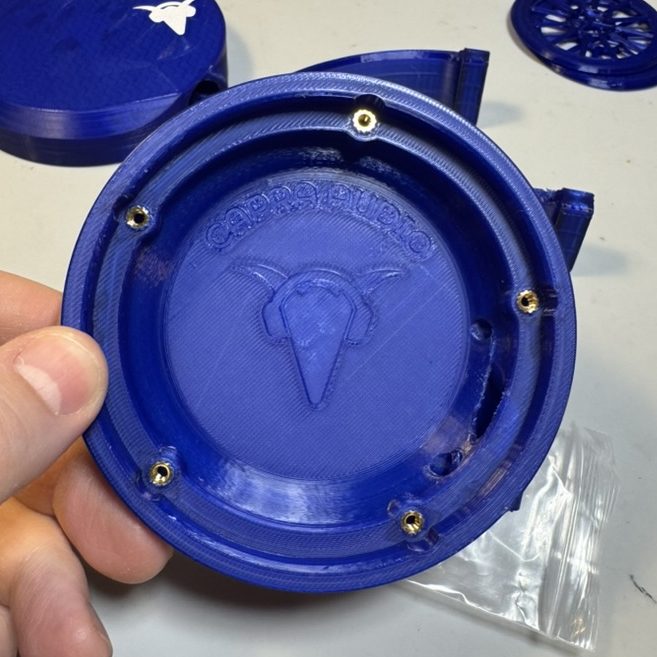
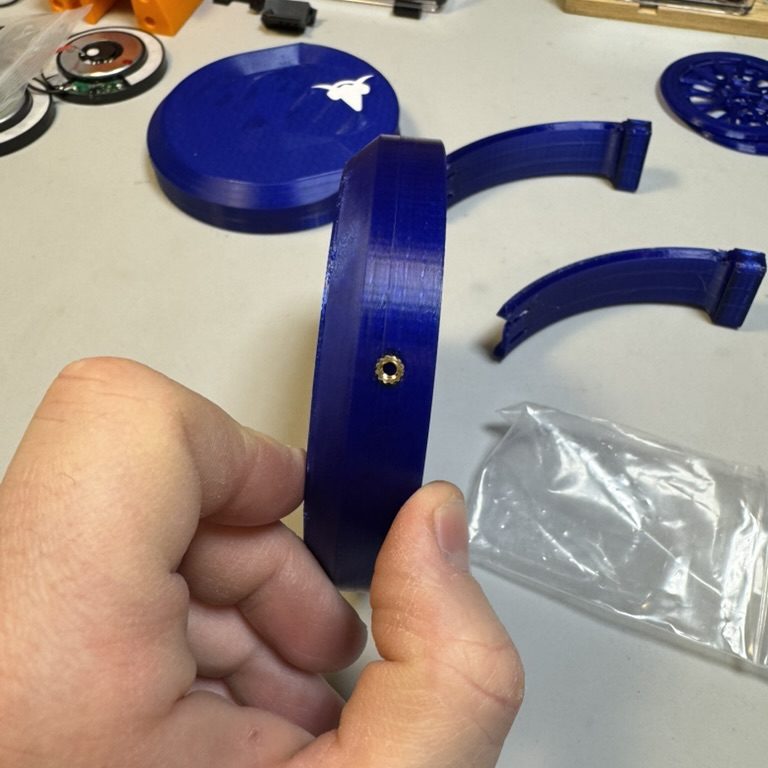
    1. While the soldering iron is hot, set 5 Voron inserts into the housing on the right ear cup. Insert flush with the inner surface, with the screw cavity pointing straight down (if you don’t get them flush, the gasket won’t fit properly and it may cause leakage/frequency shifts). Repeat with the left housing.
    2. Insert two additional Voron inserts into the yoke connectors on either side of the cups (on the back of the cups, it’s the hole closest to the inside of the headphone; the other is the tuning port and for this mod we leave the tuning port empty.)
    3. [Not required unless you’re using the Capra Headband v3: insert an additional Voron insert into each of the attachment arms while the soldering iron is still hot. If you’re using the folding arms, well, follow those instructions from Brian (it just requires additional Voron inserts into the pivot blocks).]
    4. Insert the jacks into the cups, running the connector and the wire through the internal ducts and into the main chamber. [You will need to super glue these at some point both for stability AND to get a good airtight seal for acoustic reasons; I would recommend holding off on that until you’ve gotten the whole assembly together and have verified it works; once you super glue the jacks you’re not getting them out without destroying the plastic.]
    5. Cover the grills with micropore tape. The pattern is acoustically significant; you want to leave the center ring empty, and then alternate covering every other triangle on the outer ring with micropore.

    There are a couple of ways to do this:

    • Use a laser to cut triangles (probably stuck temporarily on wax paper)
    • Manually cut triangles with a craft knife or something similar
    • Cover the entire ring with tape and then use a craft knife to cut out the middle and the empty triangles out.

    I did it the last way, and the result is a little bit of damage to the grill itself where I cut too deep; I don’t think it damaged the sound of my Ouroboros at all, but your mileage may vary.

    Assemble the Cup

    1. Place 1.5 grams of polyfill into the right housing, teased as loose as possible to fill the chamber fully.
    2. Insert speaker assembly into gasket, routing the big JST cable through the center hole. Connect the JST cables, and loosely coil the connected cable to avoid pinching it.
    3. Insert gasket into the ear cup, lining up the bulges.
    4. Place the driver grills over the drivers, with the flatter side up.
    5. Place the baffle retention ring over the driver grills inside the gasket/housing. This should neatly friction fit.
    6. Place Pad Mount over baffle, and screw down with five M3 x 16 mm screws. Tighten in a star pattern for even pressure. Snug but not too tight.
    7. Repeat with the left housing.

    Assemble the Unit and Attach the Headband

    1. Stack the tuning foam and the attenuation rings on top of the pad mount (the thin side/notch on the rings faces the front of the headphone, i.e. away from the headphone jack).
    2. Put on the pads over the foam and attenuation rings.11
    3. Screw the yokes onto the housing.
    4. Screw the yokes onto the attachment arms.
    5. Slide the comfort strap over the attachment arms, and then insert the attachment arms into the TPU band.

    The magic of the Capra Headband v3 is in its simplicity. If you’ve already inserted the Voron inserts into the adjustment arms and yokes as part of the cup/driver prep, simply screw the attachment arms to the yokes and the yokes to the inserts on the outside of the housings. Slide the attachment arms’ business ends through the Capra comfort straps and insert into the the TPU headband and voila! Instant headphone.

    Get to Listening

    Now test it! If it works correctly, go back and superglue the headphone jacks into the housing (careful not to drip superglue anywhere else), and let cure according to the directions on the packaging. If you try to use them right away, you might accidentally rip out the jacks and screw up the soldering. Or so I’ve heard. Definitely haven’t done that. Twice.

    Final Thoughts

    Congrats, you’ve now made arguably my favorite closed back headphone, and definitely my favorite 3D printed headphone! Enjoy, and join the Capra Discord server and show it off.


    1. I personally like the older version of the cup with the Capra logo rather than the smooth one to attach a fascia to; you can also take the new cup and add the Capra logo as a void or a different filament. ↩︎
    2. Unbelievably, I’ve screwed this up three or four times and ended up with two right or two left ear cups. ↩︎
    3. Seriously, make sure they’re not identical BEFORE you start to build. ↩︎
    4. Seriously make sure they’re not the same. ↩︎
    5. For serious. ↩︎
    6. I used the v2 headband on my first Ouroboros, and while it’s a cool system it’s way more of a pain in the ass to build than the v3. ↩︎
    7. The folding version honestly feel a little less stable to me and I don’t take these out in the world, so I use only the static arms. ↩︎
    8. Please use Brian’s affiliate links; the man did a yeoman’s job with these headphones and everything he does for the community and we should support him. ↩︎
    9. This is a giant pain in the ass to source. For my first Ouroboros I found Y2 tuning paper on Amazon and painstakingly cut micropore tape rings to attach them; for the second, I ordered a giant set of tuning stickers from Ali Express. ↩︎
    10. You can also print these in a pinch; no idea if or how they affect the tuning but my Ouro use the printed ones and I really love the way they sound. I’m putting the real ones in my second version. ↩︎
    11. Golem puts it this way: stacking order is pad mount –> tuning foam –> attenuation rings –> pads. ↩︎
  • [ORIGINAL MSRP $499. Available from Amazon for $159, or directly from Hifiman (though don’t buy from them) for $179 new, $139 refurbished in December 2025. Borrowed from a friend for review.]

    [Tl;dr: I’m really quite impressed by the Hifiman Sundara, particularly for a four year old product in the very crowded, competitive open-back headphone market. Especially for a Hifiman product, it’s very nicely tuned and pleasant. I personally prefer it to the Edition XS for most of my use cases, and it’s surprisingly competitive with headphones I have really, really enjoyed and reviewed positively. If they update the product in the future, I’d be very interested. As is, I’ll add it to the list of things I’d consider taking in on trade as I rotate my collection.]

    Scores:

    Cost-agnostic: 7 out of 10 Denalis

    Cost-sensitive: 8 out of 10 Denalis

    Bass1MidsTrebleSoundstageComfort/Fit2
    Hifiman Sundara2B3B3C4BB
    (more…)