Phil's Superpower of Enthusiasm

A place to write about things I enjoy, for my own edification. Headphones, audio gear, albums, whiskey, wine, golden retrievers etc.

Some frequently sought pages:

I’m experimenting with Amazon Affiliate status in an attempt to defray some of the costs of headphone reviews; Amazon links may be affiliate links (depending on whether or not I’ve figured out how to use them correctly). Please feel free to buy elsewhere; this is just one way to recoup the costs of this hobby.

  • Printing time: 10+ hours, depending on printer and materials (almost exactly 10 hours on Bambu H2D). Cost (in January 2026): $66 + a cable based on portion of materials uses, $126 for all materials out the door. Moderate difficulty.

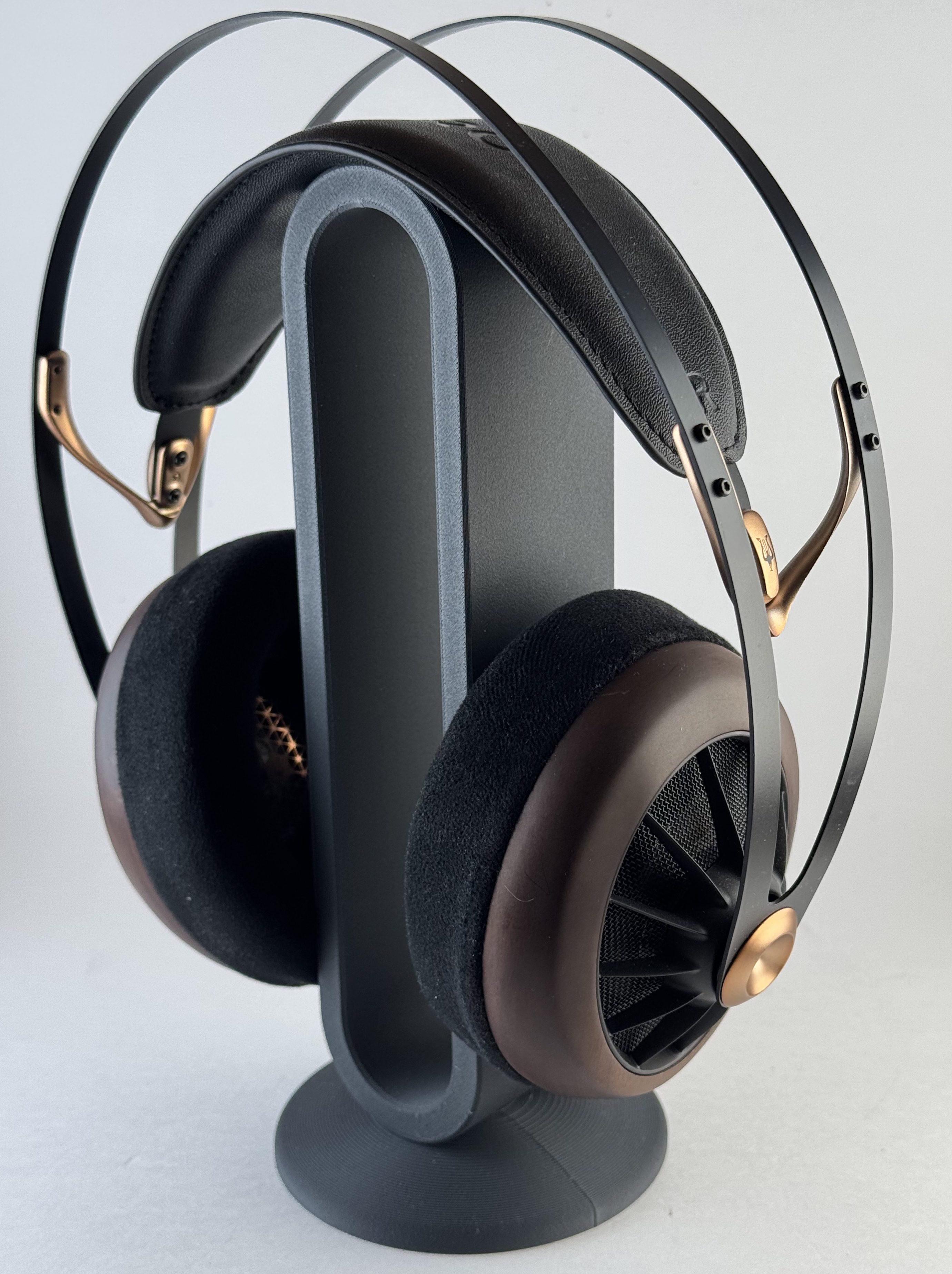
    [Tl;dr: I have been enjoying the Satyr 4 the last week or two. It’s a really fun, engaging project, and results in a really fun, engaging headphone. This isn’t the easiest 3D printing project out there (that’s the Head(amame) kit), and doesn’t produce the most resolving headphone I’ve ever built (that’s either the Satyr 3 or the DMS Open Omega), but it’s a good middle ground. I’d say that it’s not unlike the Sennheiser x Drop HD 6XX in tuning, with a little less resolution and a little more fun.

    Great project. Pretty easy to source, relatively straightforward to both print, and mostly straightforward to assemble, and an output that I really like listening to.]

    (more…)
  • [ORIGINAL MSRP $499.95. Currently available on Amazon for $499.95 new in February 2026.]

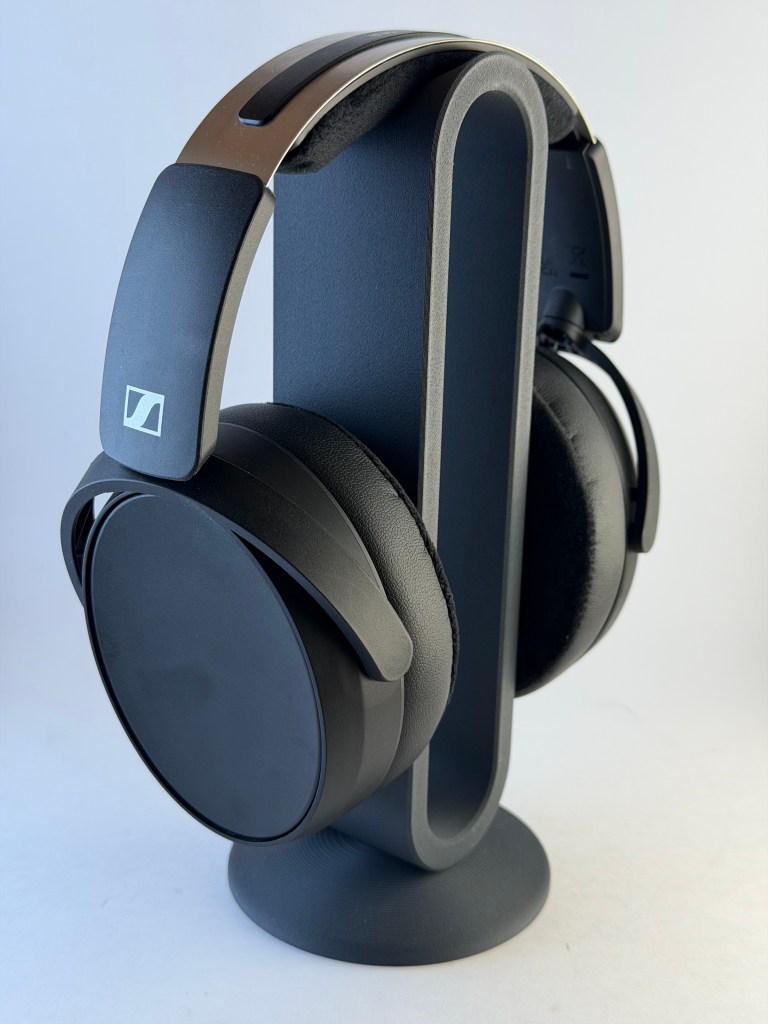
    [Tl;dr: I’m going to offer a hot take here and zig where everyone else is zagging. The Sennheiser HDB 630 are a good pair of headphones at a bad price point. I love the ethos behind the 630 and I hope that future active headphones follow its path in terms of offering parametric EQ, dongle compatibility, and a good, neutral-ish baseline tune, but I just can’t justify paying this price. For the money, I’d personally rather get a pair of Sennheiser’s older model Momentum 4 headphones and a pair of good open-back headphones for non-mobile use. The audio delta and different feature set between the M4 (properly EQ’d) and the HDB 630 isn’t as big as the price differential would suggest. The things that make the 630 better than the M4 are mostly things that a wired pair of open-backs do better than the 630 anyway. If you want one pair of headphones to rule them all, these might suit you. But for almost every use case, there’s a better, more affordable option in the current market.

    The 630 is the Swiss Army Knife of audio, and there’s a reason I don’t carry a Swiss Army Knife.]

    Scores:

    Cost-agnostic: 7 out of 10 Denalis

    Cost-sensitive: 4 out of 10 Denalis

    Bass1MidsTrebleSoundstageComfort/Fit2
    Sennheiser HDB 630 (no EQ)4B 3C4B3DC
    Sennheiser HDB 630 (w/EQ)3B3B3B3DC
    (more…)
  • A question that pops up frequently on headphone Subreddits and forums is whether it’s better to take an active, active noise canceling (ANC) headphone like a Sennheiser Momentum 4 and use it wired (losslessly) via the included 3.5 mm analog cable or listen to it via (lossy) Bluetooth.1

    My answer to this question has always been no, based largely on the assumption that one of two things is happening when you do:

    1. You’re turning off all of the active components in the headphones and relying on a) the frequency response of the driver, b) the passive characteristics of the headphone’s physical design and build, and c) the quality of signal you’re getting from whatever your source is. You’re also hoping that whatever a + b + c produce, it’s not thrown off by the ANC when it’s turned on.
    2. You’re converting the analog signal to digital (via an ADC), applying DSP/EQ/etc., and reconverting it to analog and amplifying it using the internal DAC and amp.

    The first was maybe a safer bet in a prior era when ANC headphones were less reliant on DSP to correct their physical shortcomings. For example, the earliest generation of Bose wireless ANC headsets (the QC35) weren’t badly tuned as a passive headphone, even if I preferred their sound via Bluetooth (to the point where I returned my pair after a few weeks). It’s dicier with modern production headphones that do rely on DSP for reasonable(ish) frequency responses; the manufacturer has a lot less incentive to invest the time and resources in creating a headphone that sounds good running passively when they can just make changes via DSP.

    The second option involves a lot of processing, likely mostly on board the headphone, and I question the amount of effort and expense a headphone manufacturer puts into the onboard ADC in particular given how rarely it’s going to be important for their use cases. This is definitely a better option than the first, as at least you’re using all the components that were designed around working together, but it also relies on multiple conversions being done under reasonable conditions. You can probably get away with it with a decent source, but I’m skeptical of how often it’s going to approach the quality you get from a decent Bluetooth codec.

    [The other thing worth mentioning is that modern Bluetooth protocols, while still flawed, are definitely better than they used to be and companies are doing clever things to minimize the delta between wired listening and competent Bluetooth implementations.]

    But, despite this opinion, I’d never taken the time to test this other than taking a few minutes to listen to most ANC headphones I review via the analog option, which generally resulted in a “I don’t hate it but I wouldn’t ever choose to use it” statement.

    It came up again yesterday in r/HeadphoneAdvice, and I had some time last night, so I decided to try it with the pairs I had on hand. I pulled out my collection of current ANC headphones to test that age old question: is it worth plugging them into a source via 3.5 mm analog cable to listen losslessly?

    [Tl;dr: Bathys is no worse running via 3.5 mm, everything else is worse (or at least in some way compromised) unless *you* personally like the default tune on any of them and don’t mind giving up the ability to apply EQ. Quelle surprise!]

    Here are the results:

    • Sennheiser HDB 630: Plugging in the 3.5 mm cable automatically turns off Bluetooth and creates the following signal path: analog source in –> 630’s ADC –> DSP –> 630’s DAC –> amplification. This means at least two conversions, not counting any that happens before the analog signal (if you’re playing a digital source, for example). Running this way sets the 630 to their default DSP tune (maybe a hair brighter?), turns off the ability to adjust the EQ or interact with the headset via the app (though pinching appears to still affect transparency vs. ANC), and draws down the battery. The baseline tune on the 630 isn’t BAD, per se, but it’s not great. If you have no other way to listen to your signal, this isn’t the worst, but I’d take Bluetooth over it anytime that’s an option.
    • Sennheiser M4: same as HDB 630, plugging in the 3.5 mm cable turns off Bluetooth and creates the same internal signal chain, but with a substantially worse baseline tune (at least to me, the M4 out of the box are muddy in the bass and a bit intense on the treble; they can be corrected via the Sennheiser app which is a huge win compared to the competition but it’s not great without EQ). It’s not the worst, but I definitely don’t want to listen to anything I care about this way and I 100% prefer Bluetooth + the in-app EQ.
    • Focal Bathys: You have to manually move the toggle to “On” and plug in the 3.5 mm cable. Doing so creates this signal path: analog source in –> Bathys’ ADC –> DSP –> Bathys’ DAC –> Bathys’ amplification. It disconnects you from the app and EQ, though the ANC/transparency mode button still works. The Bathys appears to default to the EQ profile you were using last, so unless you swap EQ profiles a lot, you’re probably going to get a reasonable version of its frequency response. I struggle to think of a scenario where I would prefer to listen to this over the normal Bluetooth functionality, but in a pinch it would be fine.
    • B&W Px7 S2: B&W takes a different (and potentially better?) approach and provides a 3.5 mm-to-USB-C dongle, so it seems like the analog to digital conversion is taking place in the cable.2 This means you’re functionally using the Px7 S2’s DAC mode rather than a passive one. The upside of this is that you’re using the full suite of software tools that B&W offers and getting their best performance; the downside of this is that you’re using the B&W suite of software tools and getting the Px7 S2’s best performance and it’s … not great. It’s a pretty bad tune, boomy in the bass and spikey in the treble, and the B&W app’s EQ is limited to two bands: bass and treble and you can’t fix the problems without creating worse ones.
    • Dyson Zone: The Zone doesn’t offer an analog input option. As far as I could tell, it doesn’t work with the Px7 S2’s 3.5 mm-to-USB-C ADC cable, either. Clever them.3

    So what’s the takeaway? You’re not likely to ever get a better sound experience by plugging an active headphone into a 3.5 mm source; at best, you’re going to get a similar experience and in most cases you’re going to get some substantial degradation in the listening experience when you use an analog signal over a digital one. Whether that’s a degradation that matters to you, only you can decide. I won’t be using 3.5 mm anytime I have another option, and I personally would prefer to use a Bluetooth transmitter when listening to an analog-only source.

    1. For purposes of this discussion, I’m going to leave aside whether lossless vs lossy is a meaningful difference.
      For the record, I can hear a difference on decently resolving equipment in quiet listening environments, and I don’t think it’s particularly subtle. In fact, I’m pretty sure that almost anyone could hear a difference in a quiet room with a good setup. However; it’s not a huge difference, most ANC headphones aren’t that resolving, and the moment you’re in non-ideal conditions that delta gets smaller and smaller. And how often do you use ANC headphones in ideal conditions? There’s a reason the AirPods Pro 2 are my most used headphone. ↩︎
    2. It’s possible that they’re using USB-C to transmit an analog signal, but that would be pretty weird and isn’t supported by the rest of the headphone’s behavior). ↩︎
    3. As pointed out by a Redditor, Dyson does sell a Flight Pack that lets you use the Zone via 3.5 mm input. ↩︎

  • [ORIGINAL MSRP $499. Currently available directly from Drop.com for $429 new in January 2026. Purchased used from r/AVExchange for $225 in June 2025.]

    [Tl;dr: The Aeon x Closed is a solid closed-back offering in the current market, and my personal choice under $500 if you can’t get your hands on a lightly used or new old stock Focal Elegia. They’re a little bass light, and a little treble heavy, so if you pick up a pair I strongly suggest investing some time with EQ. I’d also love to spend some time with a new pair of these, as based on a couple of things I heard I’m curious if I have a non-standard pair. Oh, the joys of buying used!]

    Scores:

    Cost-agnostic: 7 out of 10 Denalis

    Cost-sensitive: 6 out of 10 Denalis

    Bass1MidsTrebleSoundstageComfort/Fit2
    DCA Aeon X Closed3C3B4B4BA/B3
    (more…)
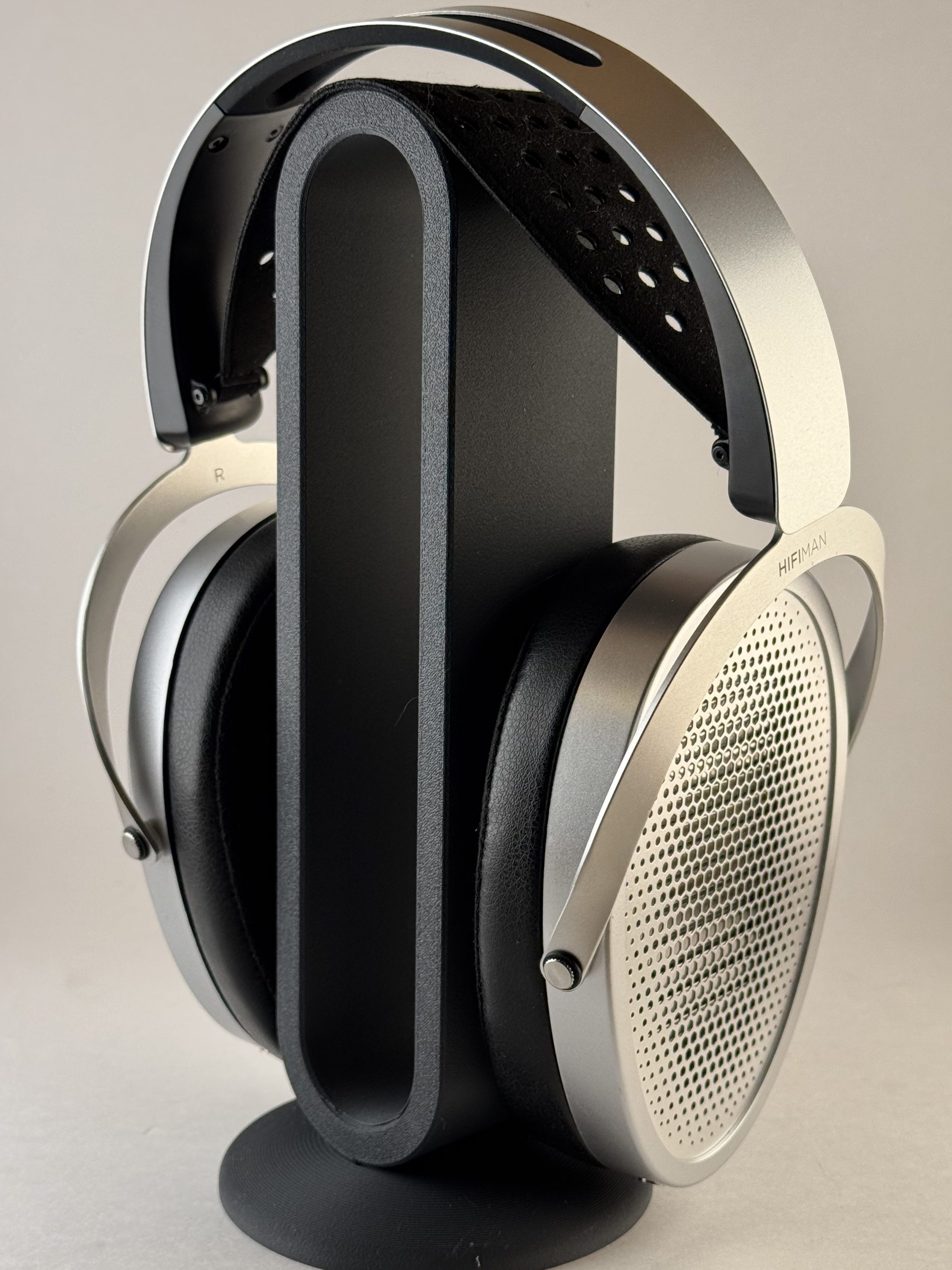
  • [ORIGINAL MSRP $149, currently $109 (new) or $89 (open box) on Hifiman.com. Purchased from Hifiman directly for $89 (open box1) in November 2025, available for $109.99 on Amazon in January 2026]

    [Tl;dr: The 400se are a competent, introductory planar magnetic headphone from Hifiman, and their current aggressive pricing makes them pretty competitive in the sub-$100 category. They’re a little undercut by Hifiman’s approach across their whole range, though, as the HE-5XX is a better headphone for only around $30 more, and the excellent Hifiman Sundara only another $50 or so. If you’re planar-curious and want to try them without spending a lot of money, they’re worth your time. Ditto if you can’t spend more than $100. If you can spend a little more, I’d go with either of the other Hifiman options (or stretch up to the Fiio FT1 Pro, if you want a really great, fun headphone at around $200).]

    Scores:

    Cost-agnostic: 5 out of 10 Denalis

    Cost-sensitive: 6 out of 10 Denalis

    Bass2MidsTrebleSoundstageComfort/Fit3
    HE400se2C3C3C2DB
    (more…)

    Pages: 1 2

  • 2025 was an interesting year in music. My total listening didn’t drop, but like 2024 I didn’t spend as much time with “new” music; my listening patterns (listening mostly via Roon) mean that a lot of my “new” music is new to me, rather than newly released. I think I might do two lists this year; one for music released in 2025 (this list) and a second for music *I* discovered this year. I also suffered a complete Roon server meltdown in September, which means that I lost a lot of track-level data from my statistics, though I should still be able to pull overall statistics out of last.fm in January when they complete their annual report out.

    I also listened to a lot less vinyl this year; my transition to more headphone listening and less speaker listening just means that my record players sat silent for more of the year (and are currently buried in other stuff).

    Without further ado, my favorite releases of 2025:

    1. “Somni” by Snarky Puppy and Metropole Orkest. I’ve been really enjoying Snarky Puppy’s back catalog since my friend Robin first invited me to see them a number of years ago, but this is the first of their albums I’ve picked up and listened to extensively immediately after release.1 It’s … really, really good. Lush, well designed, played, and mixed tracks, a really good and intriguing spatial mix for ATMOS, etc. I wish I’d been there for some of the live shows that they recorded to create the album.2 “Only Here and Nowhere Else” is the standout track to me, and I’m up to 85 listens already.3
    2. “Eusexua” by FKA twigs. I’ve been an unabashed fan of FKA twigs since at least 2022, when I fell pretty hard for “CAPRISONGS” after a couple of Peloton instructors played it a lot. “Eusexua” was a great January doldrums treat, particularly as I was breaking in a few new pairs of headphones I’d gotten over Christmas. It’s a … deeply sexy album with an interesting danceclub streak mixed throughout. The standout tracks to me are “Sticky” and “Striptease”.
    3. “Lotus” by Little Simz. This album hit my radar via an episode of Hrishikesh Hirway’s excellent podcast “Song Exploder” (thanks for the recommendation, Kristi!).4 The album is a thoughtful, poetic, and intense journey through changes in Little Simz’ life and career. It also features cameos by incredible artists like Moses Sumney, Little Dragon’s Yukimi, Yussef Dayes, and Sampha. Standout tracks are “Free” (I dare you to not groove to the last minute as Simz effortlessly flips between “free” and “three”), “Peace” (featuring Sumney), and the dance-hall-inflected “Blood”.
    4. “Baby” by Dijon. I don’t even really know how to describe this album. It’s … intense, and beautiful, and occasionally hard to listen to. It’s the kind of album that demands your attention and rewards it with an emotional journey. Standouts are “My Man” (see the previous comment about hard to listen to, though) and the groovy “Kindalove.”
    5. “Essex Honey” by Blood Orange. “Essex Honey” feels in a lot of ways like a call-back to 2013’s “Cupid Deluxe,” an album I’ve been coming back to over and over for more than a decade. It’s a great mix of orchestral strings and electronica-adjacent beats, floating vocals, funky basslines, and even a few danceable moments. My favorite track is probably “Somewhere in Between”, though the middle section of “The Last of England” feels a little like “Sympathy”-era Massive Attack (and if you know me, you know what a huge compliment that is).
    6. “Unerthed: Hole Erth Unplugged” by Toro y Moi. Toro is always unpredictable to me; I either end up loving his albums (“Anything In Return”, “Soul Trash”) or I figure out right away that they’re not for me (interestingly, “Hole Erth”). This album an acoustic-ish, country-fied version of an album that I didn’t love. It’s a stroll through a warm rain, nice and comforting and great for the background on a rainy day. My favorite track is “Undercurrent (unerthed).”
    7. “AIN’T NO DAMN WAY!” by KAYTRANADA. This is a great pump up album; I’ve been throwing it on when cleaning and it keeps me moving. I really like the opener, “Space Invaders”, and “THINGS” is an absolute groove. Not Kaytranada’s most interesting or inspirational album, but a real bop from end to end, with a nice balance up uppers and downers.
    8. “SABLE, fABLE” by Bon Iver. Probably the most accessible Bon Iver record I’ve heard? It’s nice. If you like Bon Iver, you’ll love this album. I think it’s less interesting than “22, A Million” or “For Emma, Forever Ago”, but that’s a high bar and “SABLE” is still a good album. Standout track is “There’s a Rhythm” with an interestingly bluegrass-y steel guitar, and “If Only I Could Wait” which not only features HAIM’s Danielle Haim but also brings some of their pop sensibilities (but with very Bon Iver accents).
    9. “Get Sunk” by Matt Berninger. It’s always interesting to listen to side projects from members of bands you love; this is even more true when it comes to The National’s lead singer; whether or not you love a particular album there’s something kind of cool about figuring out which pieces of a band’s work comes from which members. I have a bit of a mixed record with Matt Berninger’s side projects (loved EL VY’s “Return to the Moon”, was much more ambivalent about his first solo record, “Serpentine Prison”). Berninger’s lyrics are always great, wandering between serious and evocative and silly and fun, and this is no exception. I really enjoy “No Love” and “Junk”; the rest of the album is good but not quite as memorable.
    10. “Deadbeat” by Tame Impala. This album is a hoot; a fun mix of danceable EDM, more traditional Tame Impala fare, and even a track or two with some real Enya vibes (“Piece of Heaven”; I legitimately thought my system was shuffling when it started the first time). It’s not “The Slow Rush”, but that’s an impossibly high bar. Favorite tracks are “Not My World,” “Afterthought,” and “End of Summer.”

    Honorable mentions/need more time with:

    1. “Everybody Scream” by Florence + the Machine. Florence always deserves our attention; this just popped up on my radar too late in the year for me to have given it as much time as I should. I’ll work on that in January.
    2. “the paper doors” by Justin Tyson. Justin Tyson is a long-time collaborator of Robert Glasper and when Jahi Sundance referred to it as an album about liminal spaces, I was … intrigued. After a few listens … I still am. There’s something special here, I think. In particular I commend “Place 5” to your attention.
    3. “Voices (Expanded Edition)” by Phantogram. This is a re-release of a truly fantastic 2014 album that fell off of my radar for a while. This gets an honorable mention just because it reminded me to go back and listen to it more, though I’ve definitely enjoyed some of the new remixed versions of old tracks; “Black Out Days (Stay Away)” is a standout.

    Top EPs:

    1. “Hey Girl” by Moses Sumney and Meshelle Ndgeocello. Good goddamn. Moses Sumney’s voice, with Ndgeocello’s bass and sensibilities … I want this to be a whole album like yesterday. Listen to it loud, on good speakers, at least once.
    2. “Teardrop” by Banks. One of my favorite songs of all time, by my favorite band of all time (Massive Attack), covered by one of my favorite new artists of the 2010s (if you haven’t heard “Goddess,” go listen to it. Great album, front to back, and damned impressive for a first record). I have this not so secret desire for a remix/cover album a la The National’s “Day of the Dead” which is just artists covering/remixing Massive Attack songs.
    3. “Make me Feel” by oskar med k. One of my favorite electronic tracks of the year. Feels very … 2010s to me, in a good way.

    Wanted to love, still working on that:

    1. “Thee Black Bolts” by Tunde Adebimpe. Man, I really love TV on the Radio and Tunde’s work beyond the band (he did a phenomenal track with Massive Attack for “Heligoland”) but I just don’t get this album. I’m going to give it a little more time in 2026 though.

    2024 in Review

    A couple of quick reflections on last year’s list. “No More Water” by Meshelle Ndgeocello, “Saturn Dayz” by Blackstarkids, and “Brat and it’s completely different” by Charlie XCX are the albums that ended up on repeat throughout this last year; “Water” largely via inclusion of “What Did I Do?” on my Transducer Torture Testing List (AppleTidalSpotify).5 I stand by my earlier comparison of “Saturn Dayz” to Tribe or De La; I don’t *actually* expect them to stand the test of time as well as either of those groups, but that album is just … fantastic. Charlie XCX was the biggest surprise to me; I enjoyed hot “brat” summer as much as anyone, but I’m genuinely impressed by this remix album and the growth it demonstrates. I’m … tired of the way media tends to pit young female artists against each other, and I appreciated the messaging6 of the collabs on “Baicdbasb”. Also the remix of “360” reminded me how much I like Robyn, and introduced me to Yung Lean’s … unique delivery. I’d also, in retrospect, probably add Henry Green’s “Familiarity” and Doechi’s “Alligator Bites Never Heal” to the list; the former for it’s incredibly smooth and relaxing vibes, and the latter for … well, the exact opposite.

    I should also really fall back down the Haitus Kaiyote rabbithole again.

    So, what did I miss in 2025?


    1. Thank you, NPR! ↩︎
    2. Played without amplification, and with every member of the audience wearing a pair of wireless headphones. It’s … pretty cool. https://www.audio-technica.com/en-us/blog/behind-the-sounds-of-snarky-puppy-s-somni-18-years-of-creativity-with-audio-technica ↩︎
    3. To be fair, I’ve been doing a lot of reviews lately and it’s a great track for both guitar/bass timbre AND precision in channel separation with the central guitar riff really two closely matched guitars very close to, but not in, the center. ↩︎
    4. He discussed creating “Free” with both Little Simz and Miles Clinton James, and it’s a fascinating half hour for anyone who cares about the process of creating modern music. It’s also a bop, and probably my favorite song on the album (particularly the last minute or so as she seamlessly swaps from free to three and back). ↩︎
    5. I did a LOT of reviews this year, around 50. I was already on a pretty good pace when I got laid off in 2025, and I may or may not have engaged in some real retail therapy after that happened. ↩︎
    6. See, in particular, “Girl, so confusing” with Lorde. ↩︎
  • [ORIGINAL MSRP $450. Purchased used in October 2025 for $220 on r/AVexchange. Currently available on Amazon for $349, $399 for Pro Plus model1, and $349 directly from Sennheiser in December 2025]

    [Tl;dr: This is a really great product, one that I hope resets expectations in this market segment. Between the two stock pad configurations the versatility it brings is pretty exceptional, as is the comfort. With the velour pads, answers the question, “What if the 6XX had bass and was even more comfortable?” With the tweed pads, answers the question “What if the 600 had bass, better controlled treble, and was even more comfortable?” The only real downside is that the it trades a little bit of resolution and detail for those benefits, but for casual listening I’ll make that trade almost all of the time. If I could only have one headphone across all of my uses … this would make a really compelling case for itself.2 Pair it with a good planar for critical listening (like the HE6se v2 or Arya Stealth) and you’ve got all of your bases covered for substantially less than $1000.

    There are headphones I would take over the 490. There aren’t many, and they’re mostly more expensive and come with more limitations.]

    Scores:

    Cost-agnostic: 9 out of 10 Denalis

    Cost-sensitive: 8 out of 10 Denalis

    Bass3MidsTrebleSoundstageComfort/Fit4
    HD 490 Pro (velour pads)4B4B4C4BA
    (Tweed pads)3A4A4B4BA
    (more…)
  • Printing time: 10+ hours, depending on printer and materials. In December 2025, $60 + a cable for the cheapest version, $70 for the “pro” version of pads. Easy to moderate difficulty, depending on your choices.

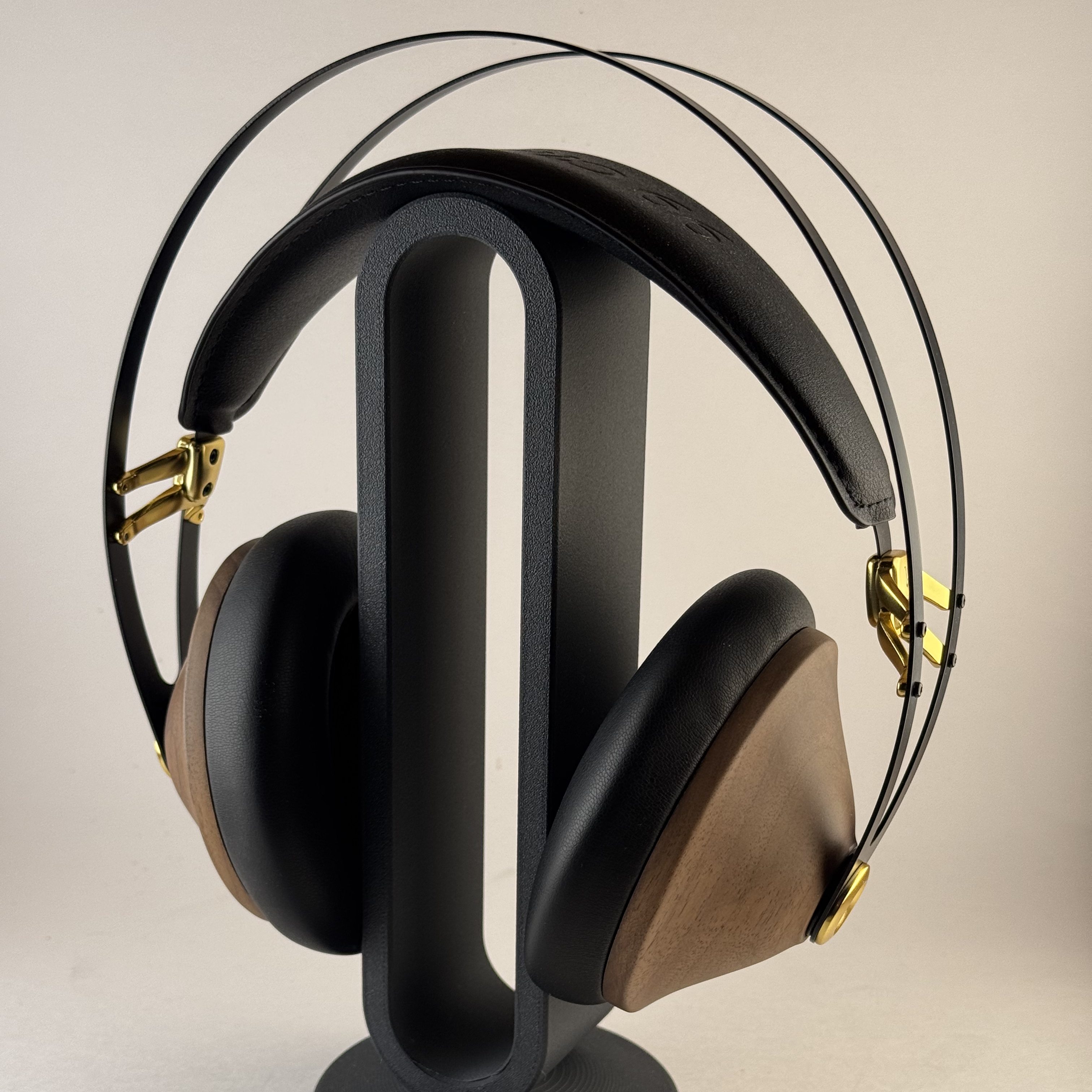
    [Tl;dr: This was my first DIY headphone, and while there were some frustrations along the way, it was a great first project AND a headphone I genuinely enjoy listening to today. If you don’t know how to solder and don’t want to learn, skip this and go with a Head(amame) kit. If you know how to solder, are curious to learn a little bit about electronics, or want a much higher performing headphone, this one is for you.

    Great project. Easy to source, relatively straightforward to both print and assemble, and an output that I really like listening to.]

    (more…)
  • It was pointed out to me the other day that though I spend far, far too much of my time in person talking about 3D printing with everyone and anyone who will listen to me (and some who really don’t want to …1), I really haven’t posted much at all about it online.2

    Table of Contents:

    1. Introduction
    2. The Prints
      1. Functional Prints
      2. Fun Prints
      3. Gift Prints
    3. The Process
    4. Conclusion

    Introduction

    I have been interested in the idea of 3D printing since at least … college? I feel like one of my physics professors talked about some early 3D printing stuff in the very early 2000s. This was a man who talked fondly of the early IRC days and has now left academia to go be a financial quant, so he’s definitely the type.3 But, the early days of 3D printing were, frankly, awful. Printers were projects in and of themselves, not for projects. Then I became a public servant, and we all know how well that pays so 3D printing seemed like an expensive (resources and time) hobby that I couldn’t really afford to get into.

    Making always seemed really cool, but I’d never really worked with my hands very much. Taking band in Hood River meant never being able to take shop, and my dad did most of his woodworking long before kids, outside of redoing the flooring in our house with laminate. I knew people who were skilled tinkers4 and had the seemingly magical ability to turn their thoughts into objects in the real world, and a brother who is a skilled sculptor, but it wasn’t a thing I thought *I* would ever be able to do.

    Then I bought a house, and realized how expensive it is to pay someone to work on one. Youtube convinced me that I could replace my own toilet … and it turned out I could. It wasn’t even very hard.

    Then I decided I wanted a wine cellar in my basement … and I, who had never even made a birdhouse before, designed and built a wine cellar from scratch.5 It’s … over-engineered. I joke that if we have an earthquake, I’m hanging out in the wine cellar for safety. It’s only kind of a joke.

    Over the last few years I’ve built some custom furniture (a crate for Denali, a bourbon shelf for the wine cellar, a custom shelf for the spot behind the door in my bathroom, display shelves around my office, the dining table on my deck, etc.), rebuilt my back deck, and added a lean-to to that deck during COVID, but I would say with very few exceptions I build thing that are functional first and aesthetic second, if at all.

    Then I lost my job, and had a LOT of free time suddenly.

    I decided that I needed some Funemployment principles, and one of them was that I needed projects. I needed to keep busy, mentally and physically, and I needed some mental challenges to intersperse with endless job applications. I thought, I enjoy woodworking, and I have a collection of headphones; why not combine the two and build a custom headphone stand worth of the single most beautiful possession I have, my beloved Bokeh. It was going to be a new thing, building something to be functional AND beautiful, so I thought it was time to join the local maker space, OlyMega, to get some help with the new skills I needed to develop. I showed up to the next Thursday night open house, and ended up having a conversation about the 3D printers scattered around the room. They were available, for anyone to use. It was … a revelation. After all, you can make headphones with a 3D printer.6 I did finish the stand project (and I’m very proud of the results), but quickly the obsession turned to 3D printing.

    I’m not great with my hands. I can make things that function, that fill a need. I’ve never been the guy who can make things that are pretty. (That was always Dylan in my house.7) I have a strongly visual memory and brain, and I’m good at both spatial reasoning and analyzing how objects exist and interact, but that has never translated into making something. 3D design, however, lets me think and build with polygons and design and redesign and adjust and prototype. It turns out this plays to my strengths. Which, honestly, maybe shouldn’t be surprising? My favorite class in high school was Drafting,8 and I really did think I’d end up as an engineer.

    It was great. I picked a bunch of projects, broke them down into one or two hour chunks, and started printing them a piece at a time when I was in the space. But … then I got impatient. I got a job!9 I had made a deal with myself that when I got a job, if I hadn’t used my entire severance, I’d buy myself a good pair of headphones as a celebration. I decided to change it up and buy myself a 3D printer instead, and build the pair of headphones. After some research, I went with one of the options I’d been using at OlyMega, the Bambu Labs P1S.10 And I loved it. And love it. And the journey continues.

    The Prints

    There’s that old bromide that everything is a nail to a hammer. And, as it turns out, everything is a 3D project to a man with a 3D printer. I think of my prints as falling into three big categories:

    1. Functional prints.
    2. Fun prints11
    3. Gift prints

    Functional Prints

    There are two kinds of people in the 3D printing community: 1) people who love 3D printing, and 2) people who love 3D printers. The danger of buying a 3D printer is that the printer becomes the project, rather than a tool to complete projects. And I certainly fell prey to this for a bit; the first half dozen prints I did were all things to increase the productivity of my printer, rather than actual prints for their own sake. Some of this is intentional; Bambu wants you to print a Benchy (a model tugboat that tests a bunch of functionality), a scraper handle (for the included razor blade), and by default the P1S spits its poop (the filament it ejects when loading, unloading, or changing its materials) out the back with no receptacle, so you need a poop chute if you don’t want your floor covered with bits of plastic.

    But, in the end, I bought my printer to make stuff, not to optimize a printer.

    Up front, I didn’t do as much functional printing as I expected. The thing about functional prints is that they’re largely pretty specific and adapted for your particular situation. Like a lot of 3D newbies, I mostly stuck with other people’s designs up front. As I got more comfortable with the software (and the hardware), I started doing some customization.

    My printer(s) live in my basement, which has six light bulbs on the same circuit, in four functionally different areas. Rather than paying an electrician to break up the circuit, I opted to use a series of Philip Hue lights (which I use in my living room, office, upstairs, and bedroom) to give me more control over where I have light. BUT, I found it basically impossible to stop hitting the switch every time I walk into the room. So, I took an existing design for a outlet cover for a light switch and modified it to 1) cover the existing light switch and 2) let me mount a Philips Hue switch:

    Is it perfect? Heck no! If I hit it too hard, the plate slips off of the outlet frame, and the magnet isn’t the best way to keep the smaller switch mounted. Would I do it this way if I did it today? Nah; I’ve got some ideas on how I’d change it if I did it again today. BUT: it WORKS. I walk into the basement and I hit this switch instead of flipping off the entire circuit.

    These are honestly the most fun kind of print for me; there are usually some things on one of the various STL websites that are close, but they almost always require some adjustments and development. There’s something about measuring, designing, and rapid prototyping that scratches a very specific itch in my brain. I’ve done a bunch of these at this point: under-desk drawers, headphone hangers, a Multiboard12 for my office, guards for my mom’s stove to avoid her (or her dog) from bumping the burners on, screw sorting bins/cases, and a variety of little plastic cases for specific applications.13

    And, of course, because I’m me, I’ve figured out how to make headphones … and made a bunch.14 Seven variations on give major models, so far. Are they the best headphones I’ve ever heard? Nah, I’ve got a pretty good collection. But are they really good-sounding, particularly when you consider how much I paid for parts and printing? Absolutely, and honestly I’ve been listening to the Golem-modded Ouroborous more than anything over the last few weeks.

    I’ll do reviews of these in the coming weeks, but both of the open-backs (the Capra Audio Satyr 3 and the DMS Open Omega) are really excellent implementations of $10 drivers, and the closed backs (Ouroboros, Golem-Modded Ouroboros, and Oreoboros) are truly excellent, particularly given that they use drivers stripped out of an pair of pretty lousy gaming headphones.

    Fun Prints

    One of the first things I did after I did a bunch of quality of life prints was start printing fidget toys, starting with a crystalline dragon. It also turns out that many of my friends, and their kids, and their nieces and nephews are big fans of little plastic things so I’ve had a grand ole time printing a variety of toys and art projects. Whether they’re tiny highland cows, dragons, fidget spinners, or Magic: the Gathering paraphernalia.

    Some are more “practical” than others, but they’re pretty much all a good time.

    Gift Prints

    It’s also just plain fun to make things that other people will enjoy. My girlfriend has a couple of adorable cats, so I have done fun prints of them (and Denali!). My best friend designs table top games, so I’m helping him with developing dice.

    The Process

    You can, of course, spend thousands of hours printing without ever doing any designing yourself. There are a dozen websites that collate .STLs15 and .3mfs16, either free or for small fees for the artists, and my experience in this community is that people are incredibly generous with their time and assistance if you run into issues. That said, I think it’s worth learning at least a little bit about how to manipulate objects, and while it’s a little intimidating right out of the gate, it’s not as complicated as it may seem at first. I started by working within Bambu Slicer (the tool that Bambu provides), which gives you very basic options like increasing/decreasing sizes, changing colors (if you have the right filament), and adding and subtracting basic polygons (cubes, cylinders, etc.), and it was a lot of fun. At some point I moved to Fusion 360, a free-to-consumers 3D modeling tool that lets you start with 2 dimensional sketches and turn them into 3D objects you can then make in the real world.

    There’s just something magical about taking a thing in your brain and turning it into an object in the physical world. As a person who has always admired and been a bit envious of artistic people who are able to express themselves through drawing or sculpture or other art forms, this lets *me* do that same thing in a different, brain-itch-scratching way.

    Conclusion

    I’ll be doing reviews of my various 3D printers over the next few weeks. I have enough experience under my belt with the various Bambu offerings that I have some pretty strong feelings and recommendations, but for anyone who is interested in this space, it’s a pretty fun one. Just … make sure you order more filament than you think you’ll need.

    Much more.

    So, so much more.

    1. Sorry, Kristi. Love ya! ↩︎
    2. Well, at least outside of Reddit and a couple of 3D printing groups/forums. It’s probably displaced audio as the top topic of discussion for me. ↩︎
    3. Also I think an Australian champion ballroom dancer? But I might be making that part up. Suuuuper interesting guy, as much as a couple of his classes drove me crazy. ↩︎
    4. Hey Robin! Howdy, Lane! ↩︎
    5. Including custom shelving units. ↩︎
    6. To the shock of precisely zero people. ↩︎
    7. Seriously, he made a copper scultpure in college that I think about at least once a month with avarice in my heart. ↩︎
    8. A mix of AutoCad and manual, pencil drawing. Brennan and I have nothing in common other than his having help design my childhood home, but that class scratched a VERY specific itch in my brain and I think about it regularly a quarter century later. ↩︎
    9. It’s awesome. ↩︎
    10. I’ll do a review at some point. ↩︎
    11. I.e., mostly headphones. ↩︎
    12. A specific category of pegboard built around a hex system rather than pegs. It’s … complicated but pretty cool? ↩︎
    13. A remix of which became my (so far) most downloaded 3D model on Maker World. ↩︎
    14. Are these really functional prints or fun prints? I’ll leave that to you to decide. ↩︎
    15. The file format for individual objects or groups of objects. ↩︎
    16. The file format for a project. ↩︎
  • [ORIGINAL MSRP $330 for the Xbox version ($300 for the Playstation/PC version). Purchased from Amazon for $329 in June 2025]

    [Tl;dr: The Audeze Maxwell are a really good pair of headphones purely from a sound quality perspective. They are, however, let down by their software (both on board and on a mobile device/desktop) and general design. When they are working, they’re great. Getting them set up, though, leaves much to be desired. In a world where the Fractal Scape is 30-60% cheaper, I’m hard pressed to recommend them to anyone who doesn’t need the ability to connect to an Xbox. It’s a little disappointing, because they really do sound good; they’re just annoying enough to use that I’d rather grab something else for my own use cases.]

    Scores:

    Cost-agnostic: 6 out of 10 Denalis

    Cost-sensitive: 5 out of 10 Denalis

    Bass1MidsTrebleSoundstageComfort/Fit2
    Audeze Maxwell4D(dongle)/ 2D(Bluetooth)3C3C4CC
    (more…)

    Pages: 1 2